A Close Read of One of Cinema’s Most Unsettling Conversations
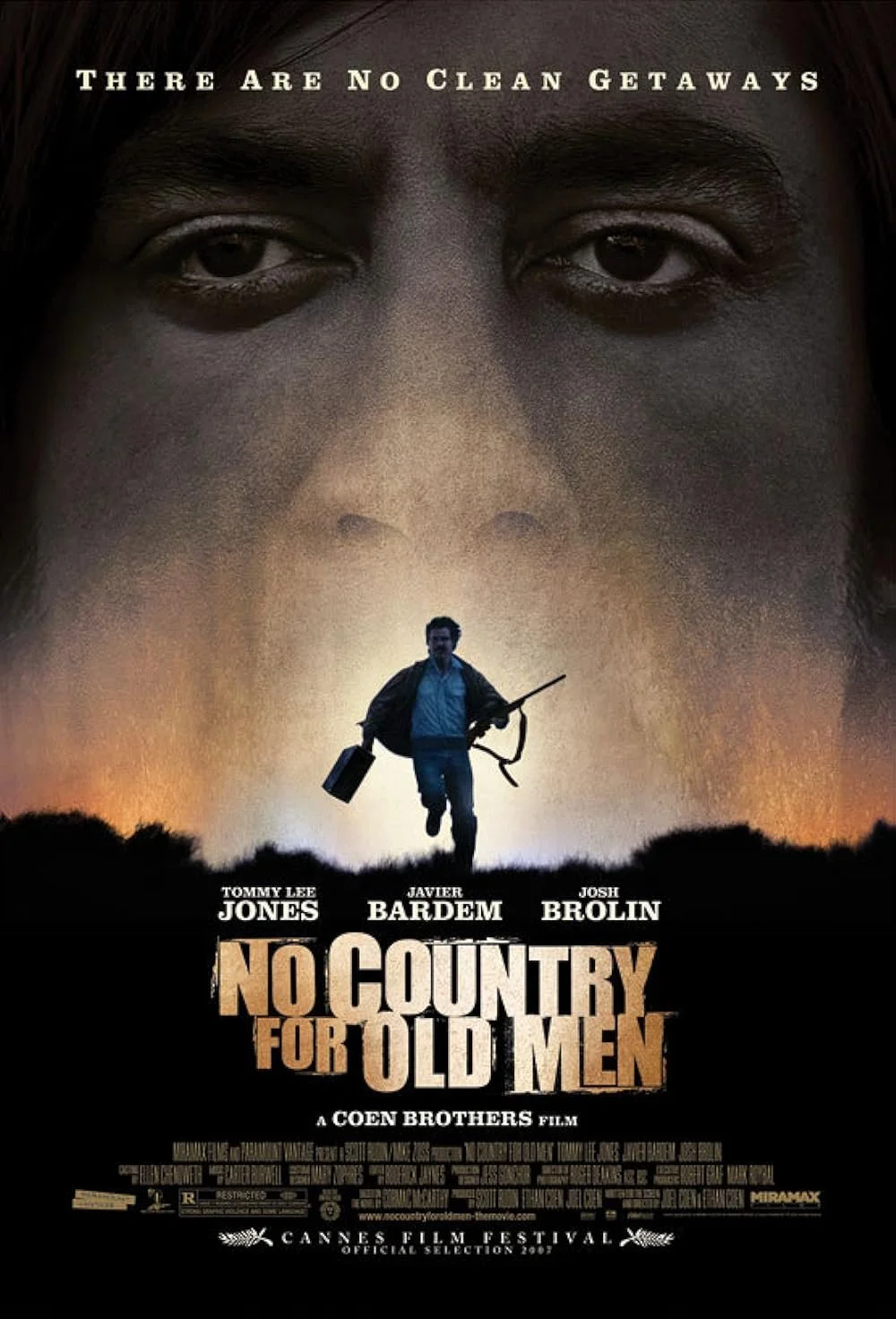
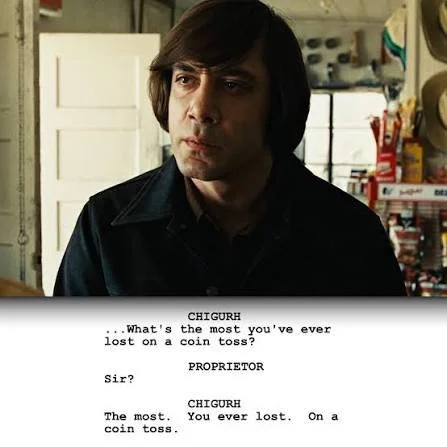
For most of the gas-station scene in No Country for Old Men, Anton Chigurh and an unnamed clerk are simply talking. And yet, almost immediately, we know something is terribly wrong. Through Javier Bardem's performance, increasingly uncomfortable camera cuts, and a soundscape in which the smallest noises suddenly feel enormous, they make us understand the rules of the encounter before the clerk himself does.
Two Men, Two Different Conversations
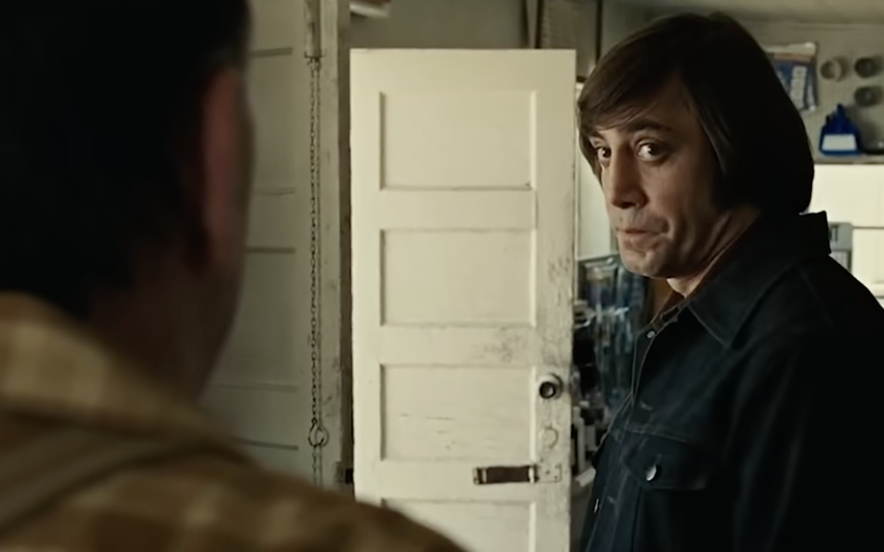
The scene begins with something mundane. Chigurh walks into a small-town gas station, buys something, and makes conversation with the clerk. Except Javier Bardem makes even casual conversation feel dangerous. Chigurh doesn't behave like someone preparing to threaten another person; that would almost make the scene easier to watch. Instead, Bardem creates a natural unrest in his delivery. His voice remains controlled, his face reveals almost nothing, and questions that should be harmless linger just slightly too long. The clerk, meanwhile, behaves exactly like what he is: a small-town shopkeeper making conversation with a customer. That contrast is what makes the scene so uncomfortable. The clerk thinks they are participating in the same social ritual. He makes small talk, explains himself, and answers questions because that is what people do when someone asks them a question. Chigurh is doing something entirely different.
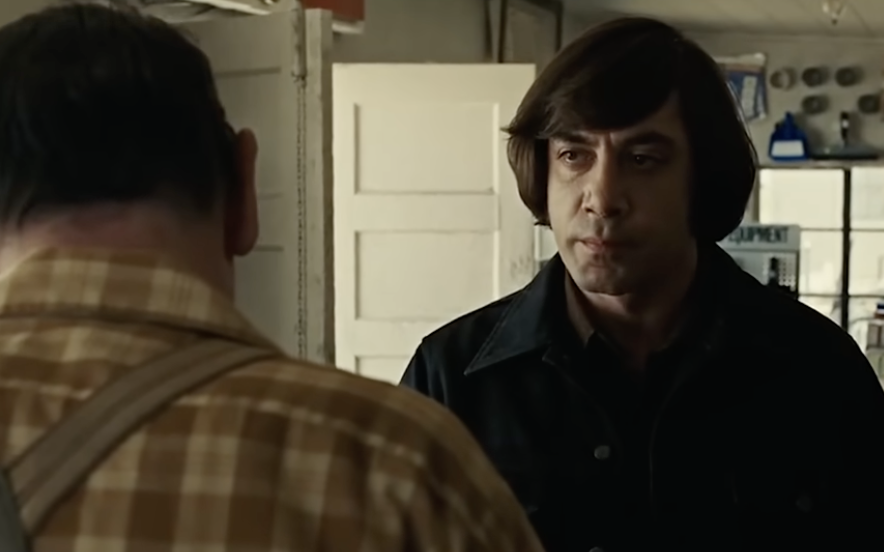
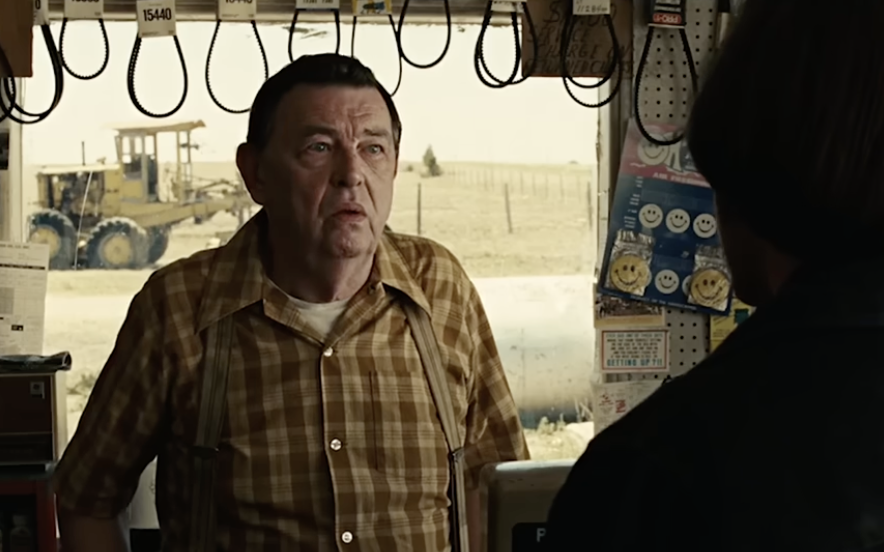
Gradually, his questions become more specific. Where does the man live? How long has he been there? How did he come to own this place? None of those questions are inherently threatening, but coming from Chigurh, every one of them feels like reconnaissance. The clerk begins to sense it, but he doesn't know what he is sensing. The camera becomes essential here because the scene is constructed largely through a simple visual pattern: Chigurh, clerk, Chigurh, clerk. The cuts force us to study their faces. Every time we return to the clerk, he seems slightly more aware that something about this interaction isn't right. Every time we return to Chigurh, we search Bardem's expression for information and find almost none. The physical contrast between the two men makes those cuts even more effective. The clerk appears ordinary and almost painfully harmless. Chigurh seems as though he has wandered in from an entirely different world. The counter separates them, but it doesn't feel protective. It feels like a line, and we begin waiting for Chigurh to cross it.
Suddenly, Everything Is Loud
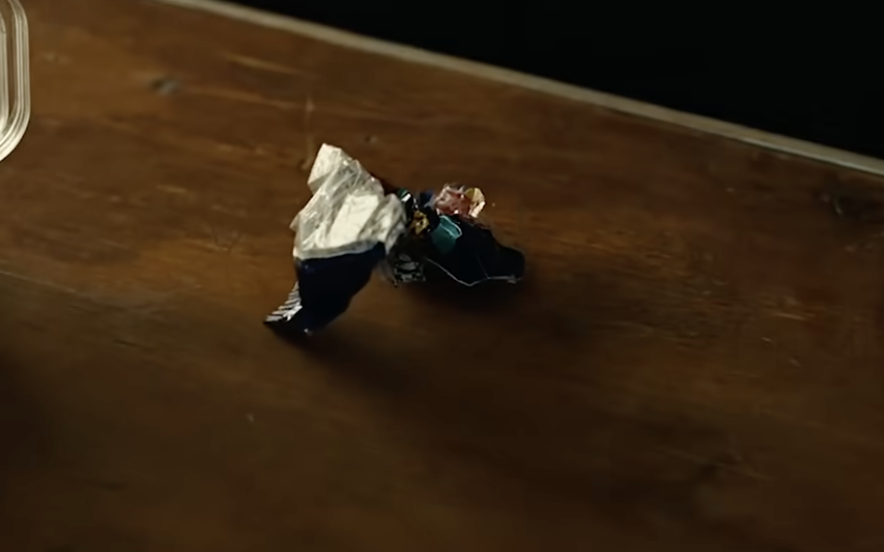
Then there is the wrapper. Chigurh has been eating peanuts, and he places the crumpled wrapper on the counter between them. As the conversation continues, the wrapper slowly begins to unfold. The sound is tiny. In the scene, it feels deafening. That is what tension does to our senses. Once we understand that something terrible might happen, everything in the room becomes potentially meaningful. The rustling wrapper demands attention. The movement catches our eye. Silence becomes uncomfortable and pauses become threats. The Coens don't need a swelling score instructing us to become nervous. They make us nervous enough that the sound of trash expanding on a countertop becomes suspenseful.
Then Chigurh produces the coin: another tiny object, another tiny sound, and suddenly the most important thing in the room. The most disturbing part of the coin toss is what Chigurh never says. He never tells the clerk, “If you call this incorrectly, I will kill you.” He doesn't need to. We understand. That realization is one of the scene's greatest achievements because the threat exists almost entirely in implication. Chigurh asks the man to call the coin. The clerk doesn't understand why. Chigurh insists. By this point, we have learned enough about Chigurh's presence to understand something the clerk cannot possibly know: this apparently meaningless game has consequences. The clerk finally calls it correctly, and the tension breaks. Sort of.
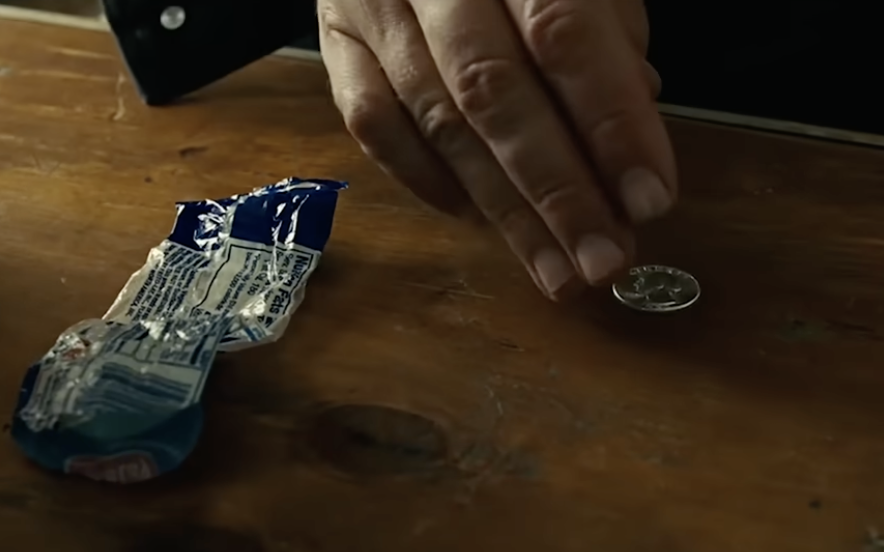
Chigurh then tells him not to put the coin in his pocket because it will become just another coin, which reveals something deeper about his worldview. The coin is no longer simply currency. Chigurh has assigned it meaning, treating its journey through time as though it has culminated in this particular place, at this particular moment, to determine this particular man's fate. But the coin did not walk into the gas station. Chigurh did.
The Illusion of Fate
That contradiction is what makes the scene more than an exceptionally well-made exercise in suspense. Chigurh behaves as though he is surrendering the outcome to chance: heads or tails, live or die, the coin decides. But that framing allows him to obscure the most important fact in the room: Chigurh decided there would be a coin toss. The clerk did not agree to the game. Chance did not place his life in danger. Chigurh did. The coin allows him to transform a personal choice into something resembling fate, treating himself less like a murderer making decisions than an instrument carrying out outcomes that were somehow already inevitable.
And because the clerk wins, he never even realizes what happened. He will presumably continue his day knowing only that an extraordinarily strange man came into his store and made him flip a coin. We know he just survived. That gap between the clerk's understanding and ours is the final piece of the scene's tension.
The Coens could have made Chigurh's threat explicit. They could have shown us a weapon, given the clerk a moment of realization, or added music that told us precisely how afraid to be. Instead, they trust us. We notice Bardem's pauses. We notice the clerk's growing confusion. We notice the cuts between their faces. We hear the wrapper unfolding. We watch the coin leave Chigurh's hand. Somewhere along the way, without anyone ever saying it, we realize that we are watching a man gamble for his life.
The clerk never fully understands the scene he is in. The audience does. And that space between what he knows and what we know is where nearly all of the terror lives.