Why Evil Dead Burn Doesn’t Work
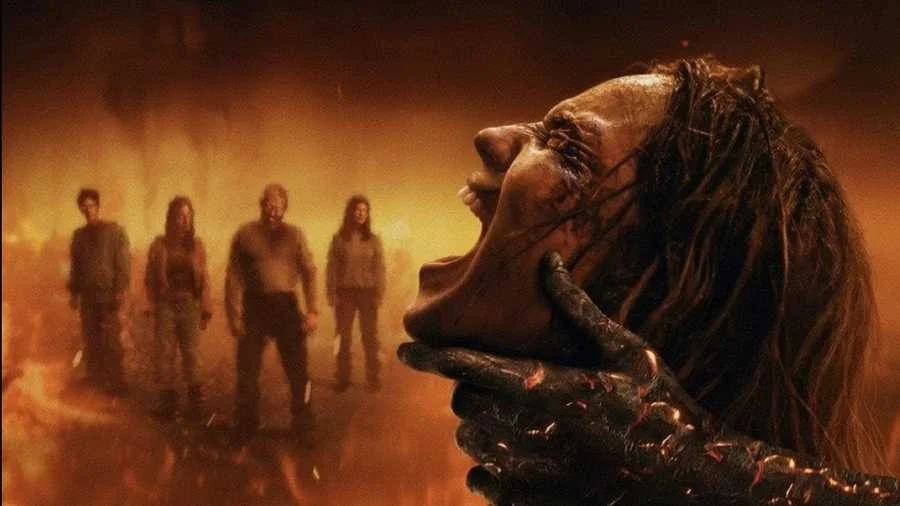
The most interesting idea in Evil Dead Burn appears during its final confrontation. After surviving a night of demonic possession, Alice discovers that her abusive husband Will was never properly cremated. He returns as a Deadite and pursues her to a construction site, forcing her to kill him again before she can finally escape.
The metaphor is obvious but effective. Will continues to terrorize Alice even after his death. His family, his home, and eventually his corpse keep her trapped within the cycle of violence he created. Alice is not simply fighting another Deadite. She is fighting an abuser who refuses to release his control over her.
Unfortunately, the movie never finds the right tone to make that idea powerful.
The Evil Dead franchise has always existed between horror and comedy. Sam Raimi’s films pushed their performances and violence so far that the gore became slapstick. Fede Álvarez’s 2013 remake moved in the opposite direction, removing most of the humor and committing completely to darkness. Its addiction allegory supported the story without diminishing how brutal or frightening the movie felt.
Evil Dead Burn gets stuck between those approaches. It is not exaggerated, funny, or inventive enough to work as camp, but it is not dark or frightening enough to match the 2013 film. Its gore is graphic without feeling shocking and excessive without becoming entertaining.
That tonal uncertainty weakens the domestic-violence theme. Will’s return should feel like the terrifying culmination of Alice’s story. Instead, the construction-site confrontation becomes another elaborate gore sequence involving tar, a jackhammer, and the Kandarian Dagger. The mechanics of the violence begin competing with its emotional meaning.
The performances have a similar problem. Souheila Yacoub gives Alice a convincing physical exhaustion, but the screenplay never develops her interior life enough for the metaphor to carry much weight. The Deadites are theatrical without being consistently funny, while the human performances are serious without feeling emotionally grounded. Everyone appears to be acting in a slightly different version of the movie.
There is a compelling idea hidden inside Evil Dead Burn. The Deadites could have represented an abusive family system that continues protecting the abuser while punishing the victim. Will’s return could have become a genuinely frightening expression of how trauma follows someone after the relationship ends.
But the film needed to choose a direction. It could have embraced Raimi’s grotesque comedy or followed the 2013 remake into genuine darkness. Instead, it remains trapped between camp and seriousness.
Evil Dead Burn understands what it wants to say about domestic violence. It simply cannot make that statement as frightening, funny, or emotionally powerful as it needs to be.
