How A Knight’s Tale Makes the Middle Ages Feel Alive
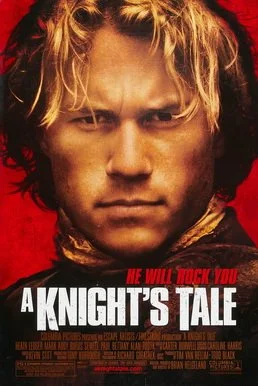
Most medieval films want you to admire the past. A Knight’s Tale wants you to feel it.
The film’s use of classic rock music is often treated like a fun gimmick or stylistic novelty, but I think that undersells what the movie is actually doing. The soundtrack is not there simply to modernize the Middle Ages or make the film feel “cool.” It exists to collapse historical distance entirely. Brian Helgeland’s film is less interested in recreating medieval Europe with strict accuracy than it is in recreating the emotional experience of spectacle, celebrity, class rebellion, and communal excitement.
The music makes medieval life feel alive instead of historical.
That distinction matters because most period pieces unintentionally treat history like something sealed behind glass. Characters speak in restrained dialogue, orchestral scores swell beneath elaborate costumes, and the audience is encouraged to observe the past respectfully from a distance. A Knight’s Tale rejects that distance almost immediately.
The opening tournament sequence set to Queen’s “We Will Rock You” tells you exactly what kind of movie this is. The crowd stomps and claps in rhythm as though they somehow know the song centuries before it exists. On paper, the moment sounds ridiculous. In execution, it feels completely natural because it is emotionally true. Modern sports crowds are loud, rhythmic, theatrical, and communal. Medieval tournaments probably were too. The film understands that audiences already know how to emotionally process crowd spectacle through modern sports culture, so instead of pretending jousting was some quiet aristocratic ceremony, it turns the arena into a rock concert.
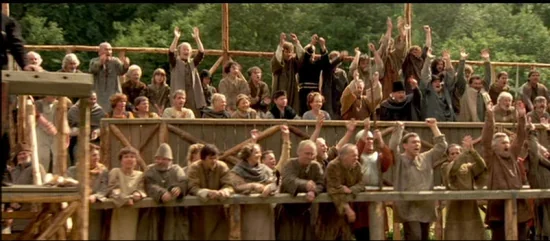
That choice changes everything. Suddenly, the Middle Ages stop feeling like homework.
The soundtrack becomes even more effective because of the specific genre the film chooses. If A Knight’s Tale simply used generic modern pop music, the effect would not feel nearly as intentional. It uses classic rock for a reason. Rock music is loud, physical, rebellious, and messy. It carries working-class energy into spaces traditionally associated with aristocratic control. That fits William Thatcher perfectly. He is a peasant attempting to invade a social structure built specifically to exclude him. The soundtrack externalizes that rebellion before the dialogue even needs to explain it.
The music does class work.
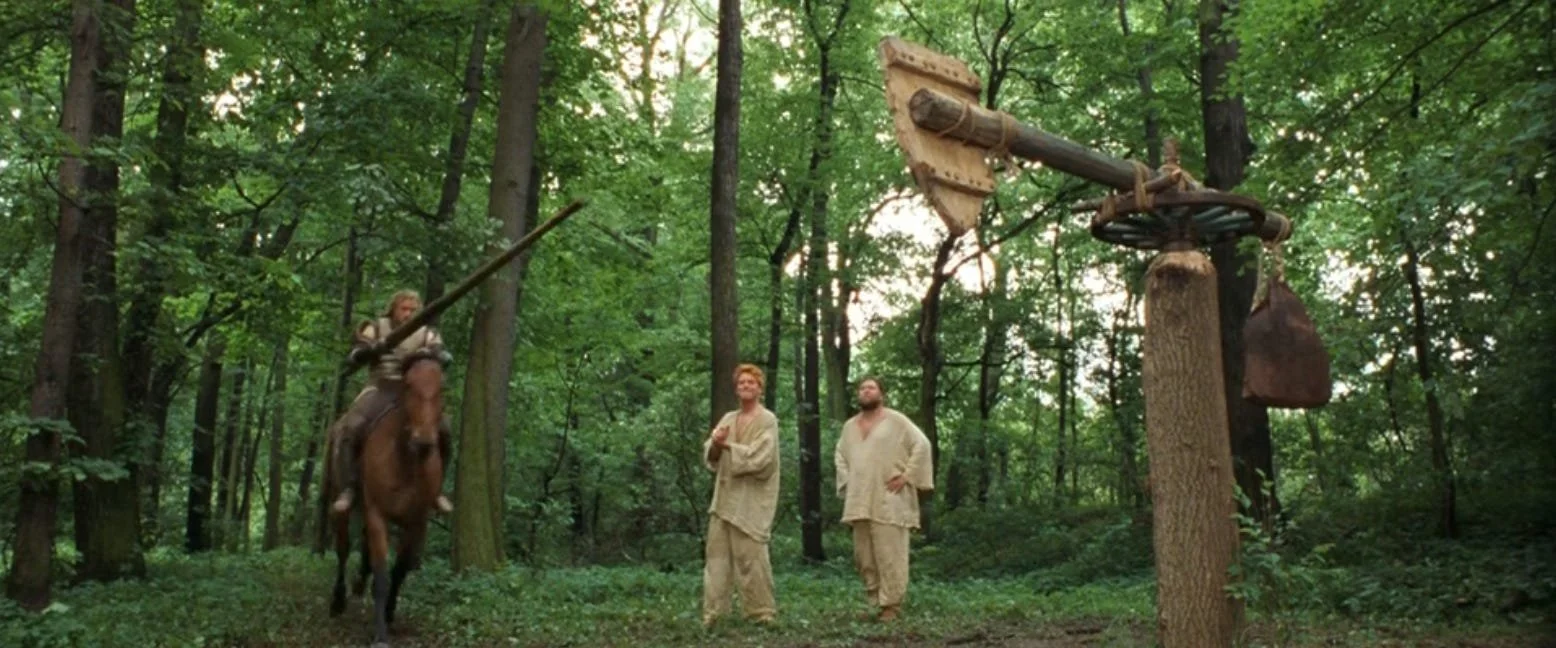
The “Low Rider” sequence where William is prepared for tournaments perfectly captures this energy. The montage turns armor preparation into something closer to an athlete getting ready for a heavyweight fight or a rock star walking backstage before a concert. The “Takin’ Care of Business” montage works the same way. These sequences are joyful in a way period films rarely allow themselves to be. Winning tournaments feels less like preserving medieval tradition and more like a group of friends slowly becoming celebrities.
That momentum is a huge reason the movie remains so watchable. The soundtrack makes the film accessible even to viewers who normally dislike historical dramas or British period pieces. You do not need to understand medieval politics or tournament culture to understand what AC/DC or Thin Lizzy feels like emotionally. Music becomes a universal language. Even when it is tied to a very specific genre like classic rock, it still communicates excitement, rebellion, confidence, and energy instantly.
That universality is probably why the film connected with me so strongly growing up. Even before fully understanding the class dynamics or genre inversion happening beneath the surface, the movie simply felt alive. Every song choice creates emotional immediacy. You are not watching distant historical figures preserved in cinematic amber. You are hanging out with them.
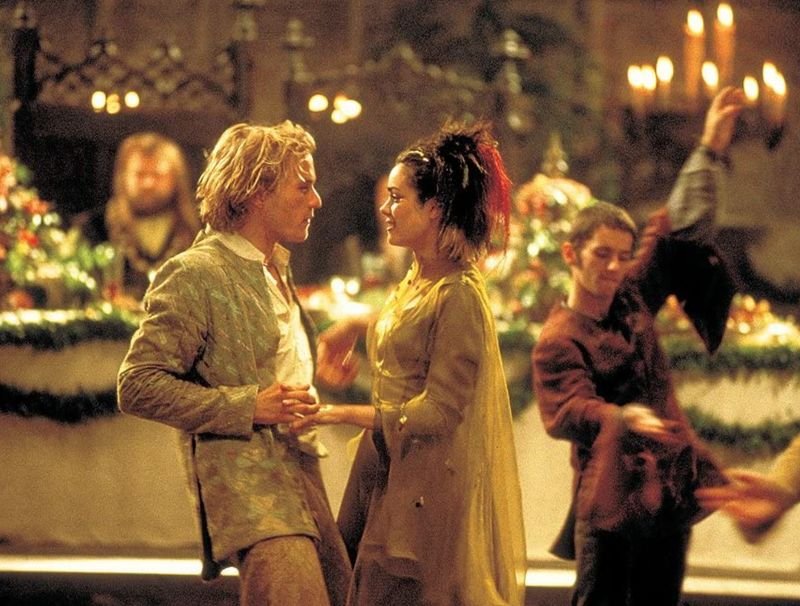
The Bowie dance scene might be the clearest example of this philosophy. On the surface, playing “Golden Years” during a medieval dance sequence should completely destroy immersion.
Instead, it somehow deepens the immersion. The scene reveals how artificial our expectations for period films actually are. We accept orchestral scores in medieval movies because cinema has trained us to associate them with historical prestige, but those scores are just as much a stylistic construction as classic rock. A Knight’s Tale exposes the illusion.
The costumes contribute to this effect too. The armor, hairstyles, and overall styling constantly flirt with modern aesthetics without fully abandoning medieval iconography. Everything in the film exists in a strange space between historical fantasy and modern celebrity culture. That blend is exactly why the movie works.
William Thatcher is not just becoming a knight. He is becoming famous.
The cheering crowds, the dramatic entrances, the announcer introducing competitors like professional wrestlers, the montage sequences, and the soundtrack choices all quietly transform knighthood into sports entertainment. Medieval celebrity culture starts looking surprisingly similar to modern celebrity culture.
By the time “The Boys Are Back in Town” plays as the group returns to London, the movie fully understands its own identity. These are not distant historical archetypes anymore. They are a team. A band. Underdogs returning home after surviving something together. Then the film closes with AC/DC’s “You Shook Me All Night Long,” which somehow feels both absurd and completely earned.
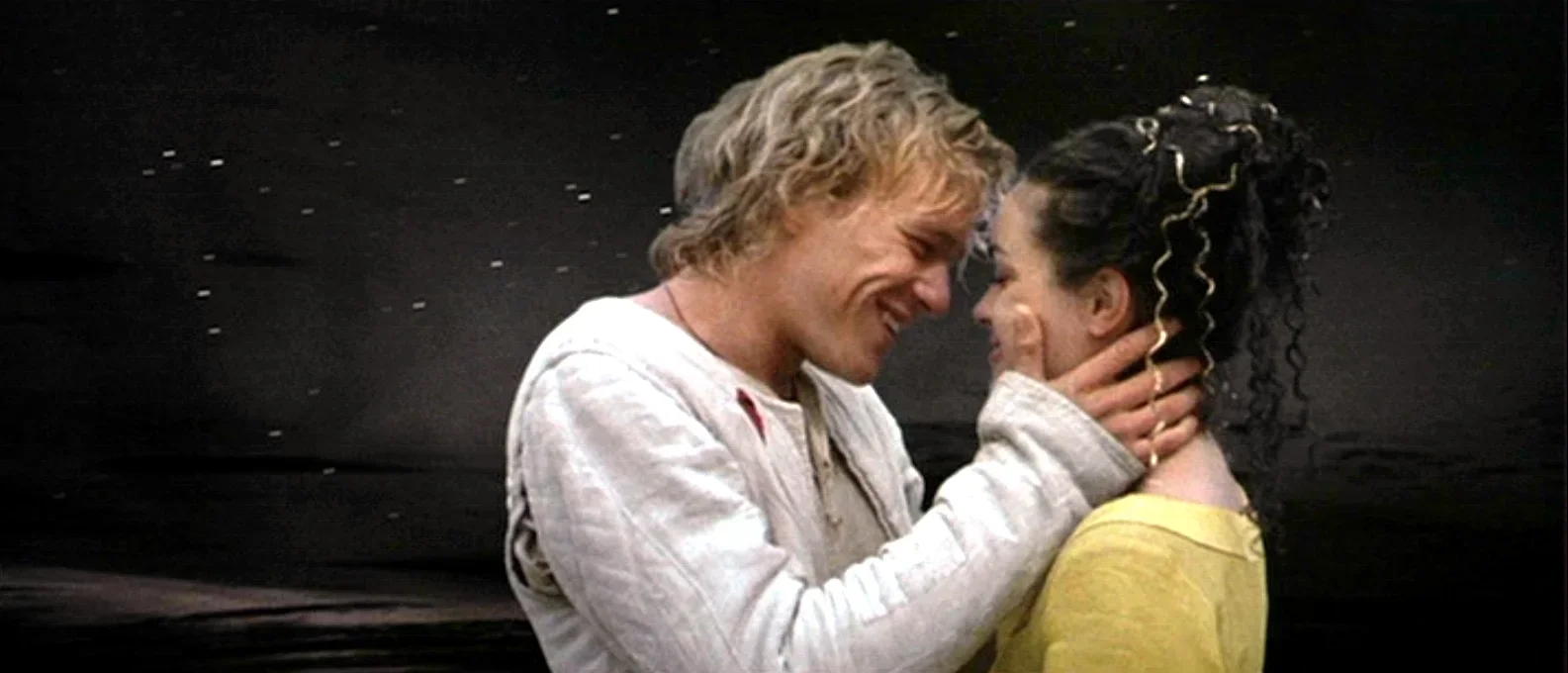
That balance is what makes A Knight’s Tale so enduring. The movie never mocks the medieval setting, but it also refuses to trap the audience behind the cold museum-glass version of history that so many period films create. Instead, it uses rock music to remind viewers that people in the past were not fundamentally different from us emotionally. They celebrated victories loudly. They idolized public figures. They wanted freedom, status, love, and recognition.
The soundtrack bridges centuries through feeling rather than realism.
And maybe that is why the film continues to resonate across generations. Not because it makes the Middle Ages accurate, but because it makes them human.
