Iranian Cinema and the Politics of Realism
An essay from the History of World Cinema series
Part 3
Few national cinemas demonstrate the relationship between politics and filmmaking more clearly than Iranian cinema.
Where Italian Neorealism emerged from the ruins of World War II and the French New Wave emerged from youth culture and cinephilia, modern Iranian cinema developed under political repression, censorship, and revolution. That tension shaped everything.
From 1941 to 1978, Iran was ruled by a Western-aligned monarchy that promoted modernization and Western cultural influence. Popular commercial films during this period often followed the “filmfarsi” formula — melodramatic entertainment centered around tough-guy heroes and simplified morality.
After the Iranian Revolution, however, the relationship between cinema and government transformed dramatically.
The new regime imposed strict censorship on filmmakers while simultaneously recognizing cinema’s cultural importance. Directors suddenly had to navigate an environment where political expression carried serious consequences.
Ironically, those limitations helped produce one of the most artistically innovative film movements in modern cinema.
Like Italian Neorealism and the French New Wave before it, Iranian filmmakers embraced realism. Non-professional actors. On-location shooting. Long takes. Ambiguous narratives. Stories centered around ordinary people.
But Iranian cinema developed its own distinct emotional texture. Many Iranian films feel suspended between realism and metaphor, as if everyday life itself has become symbolic.
This can be seen clearly in A Moment of Innocence (1996), directed by Mohsen Makhmalbaf.
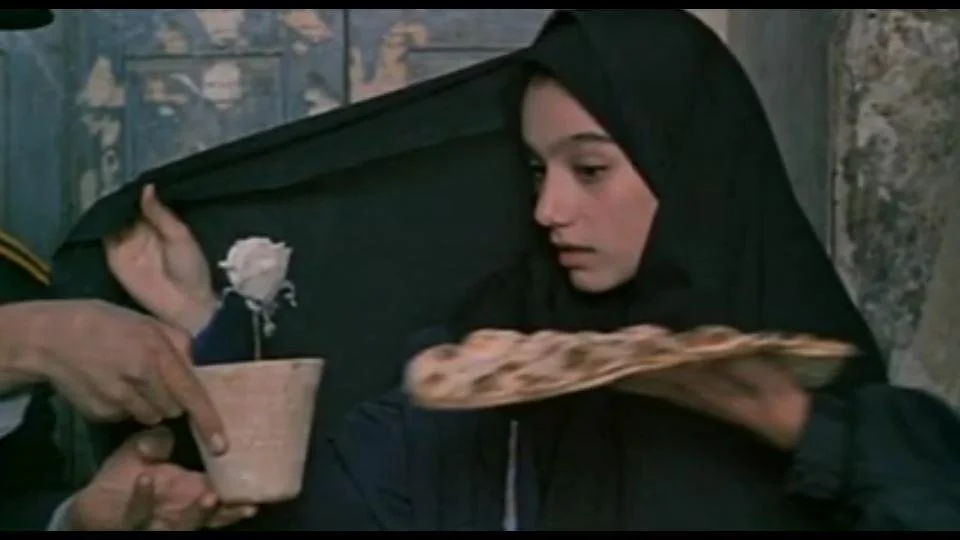
Mohsen Makhmalbaf’s A Moment of Innocence (1996) blurs memory, autobiography, and fiction, turning personal political trauma into a meditation on cinema, identity, and the instability of truth itself.
The film reconstructs an event from Makhmalbaf’s own youth when he stabbed a policeman during political activism under the Shah’s regime. Rather than presenting the story through straightforward realism, the film blurs the line between memory, performance, autobiography, and fiction.
Actors audition to portray younger versions of real people. The director appears within the narrative. Reality becomes unstable.
This subjectivity separates Iranian cinema from the more observational realism of Italian Neorealism.
Like the French New Wave, Iranian filmmakers often foreground the role of the director as an artistic presence within the film. But unlike the playful cinephilia of the French New Wave, Iranian reflexivity often carries political and philosophical weight.
Cinema becomes a way of negotiating memory, identity, and repression.
One of the most striking similarities between Iranian cinema and earlier realist movements is the use of narrative looseness. Scenes drift. Conversations wander. Cause and effect feel uncertain.
In A Moment of Innocence, sequences involving tailors, auditions, and casual dialogue initially seem disconnected from the central narrative. Yet those diversions create emotional authenticity. Life rarely unfolds with clean dramatic structure. Realism in these films emerges through uncertainty.
At the same time, Iranian cinema remains deeply aware of film history itself. Characters discuss movies. American cinema appears as both influence and cultural tension. The films acknowledge their own existence as films. This reflexivity connects Iranian cinema more closely to the French New Wave than to Italian Neorealism.
Yet all three movements share the same foundational impulse: a rejection of artificiality.
Each movement emerged from dissatisfaction with dominant cinematic conventions.
Each sought greater emotional or political honesty.
And each redefined realism according to its historical moment.
Italian Neorealism treated realism as social responsibility.
The French New Wave treated realism as personal expression.
Iranian cinema transformed realism into political survival.
Together, these movements reveal how world cinema constantly evolves through dialogue across nations, generations, and revolutions.
No film movement exists in isolation.
Cinema travels.
Styles migrate.
And every new movement carries traces of the ones that came before it.
Sources & Further Reading
A Moment of Innocence (Mohsen Makhmalbaf, 1996)
The 400 Blows (François Truffaut, 1959)
André Bazin, What Is Cinema?
François Truffaut, “A Certain Tendency in French Cinema”
