Backrooms
2026, Kane Parsons
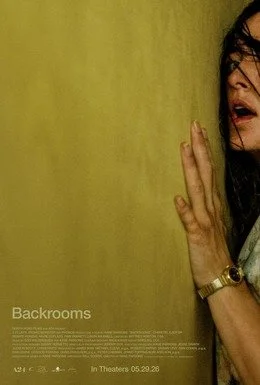
“Lost in its own maze, Backrooms mistakes confusion for mystery.”
Rating: 2 out of 5
How it sticks: Cut on credits — gone immediately
First Look
Some horror films leave you unsettled. Others leave you thinking. Backrooms left me wondering how a concept this strong could produce a film this empty.
I went into the movie with almost no familiarity with the broader Backrooms mythology. I had never watched Kane Parsons' viral YouTube series, played the games, or followed the online lore. The premiere included a short introductory video explaining the phenomenon and setting up the world, so I don't think a lack of background knowledge is what held me back. The problem is that the film seems to believe mystery and storytelling are the same thing.
The Backrooms is based on one of the internet's most effective horror concepts: an endless maze of liminal spaces where reality no longer follows recognizable rules. It's a premise built on atmosphere and dread, and for a while the film succeeds on those terms. But atmosphere can only carry a feature film so far.
As the movie progresses, scenes begin to repeat themselves. Characters wander through yellow hallways and empty rooms for what feels like an eternity. Promising setups lead nowhere. Creepy sequences appear, generate tension, and then simply end. The movie repeatedly hints at answers or revelations without ever delivering them.
Rather than creating intrigue, the lack of payoff eventually becomes frustrating.
On how it’s made
Production Design
The strongest aspect of the film is unquestionably its production design. The Backrooms themselves are fantastic. The sets feel enormous, oppressive, and genuinely unsettling. Every room looks like a place you shouldn't be. The film captures the strange dream logic of the original internet phenomenon remarkably well, and there were several moments where I found myself admiring the environments more than the story unfolding inside them.
Ironically, that may be part of the problem… the film relies so heavily on the power of its setting that it often forgets to build compelling characters or narrative momentum around it. The production design does most of the heavy lifting while the script struggles to provide a reason to keep moving forward.
Narratives
The film's biggest weakness is its narrative structure. Rather than building toward meaningful revelations or character-driven payoffs, it spends much of its runtime moving from one mysterious event to the next without clear progression. Ambiguity can be a powerful storytelling tool, but Backrooms often uses it as a substitute for narrative development. Questions pile up faster than the film can explore them, leaving the story feeling less mysterious than incomplete.
Performances
Even talented performers like Renate Reinsve feel stranded. She is an actress I've enjoyed in other projects, but here the material gives her very little to work with. Chiwetel Ejiofor fares somewhat better, but even he can't overcome a screenplay that seems more interested in withholding information than developing ideas.
The creature is perhaps the film's biggest disappointment. Marketing and pre-release discussion built anticipation around the monster, and the film even cast Robert Bobroczkyi, whose physical performance work in Alien: Romulus helped create one of that film's most memorable images. Yet Backrooms buries much of that physicality beneath heavy CGI. Instead of feeling uncanny or threatening, the creature often looks artificial and undercuts the horror it is supposed to generate.
Theory moment
The film seems to operate on a simple philosophy: nothing in the Backrooms makes sense, therefore nothing in the movie has to make sense either.
That approach works for a short film. It is much harder to sustain for nearly two hours.
Ambiguity can be powerful when it invites interpretation. Here it often feels like a substitute for storytelling. Questions accumulate while answers never arrive. Character motivations become increasingly unclear. Major developments occur without emotional or narrative grounding.
The result is a film that mistakes confusion for depth.
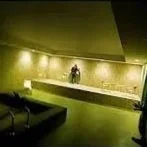
One Moment I can’t stop thinking about:
The rope sequence is easily the film's best scene.
As characters lower a camera into the Backrooms, the movie finally generates a sense of discovery and danger. The concept feels fresh, the tension is effective, and for a brief moment the film captures the terrifying potential of its premise. It is one of the only scenes where the mystery actively drives the story forward rather than stopping it in its tracks.
Unfortunately, like many of the movie's strongest ideas, it ultimately leads nowhere.
Rewatch value: This feels like a concept stretched far beyond its natural limits. What worked brilliantly as a short-form internet horror project becomes repetitive and increasingly frustrating at feature length. I would genuinely rather try to find my way out of the Backrooms than sit through the movie again.
Key takeaway:
Kane Parsons deserves credit for transforming an internet horror phenomenon into a studio feature at such a young age. The visual imagination on display is undeniable, and the Backrooms themselves visually delivered.
But compelling sets and an intriguing premise are not enough. As a feature film, Backrooms never finds the story needed to support its concept. It wanders endlessly through its own hallways, searching for meaning and never quite finding it.
