Obsession
2026, Curry Barker
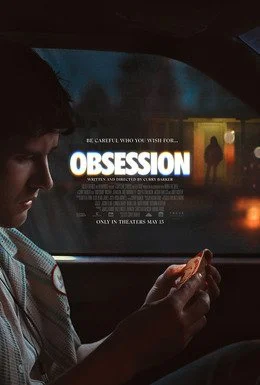
“What if your dream relationship was built like a curse?”
Rating: 4 out of 5
How it sticks: Echoes — kept resurfacing over days
First Look
Blumhouse has always existed in a strange space between elevated horror and disposable multiplex horror. For every Get Out or The Invisible Man, there’s a Truth or Dare lurking around the corner. Obsession feels like a return to the studio’s stronger instincts: atmospheric horror rooted in character, tension, and visual storytelling rather than pure jump-scare mechanics. Directed by rising filmmaker Curry Barker, the film turns a simple monkey’s-paw premise into something genuinely unsettling. It’s quiet, patient, and far creepier than I expected going in.
The film follows Bear (Michael Johnston), a painfully awkward music store employee who uses a supernatural object called the “One Wish Willow” to make his longtime crush Nikki (Inde Navarrette) fall in love with him. The wish works almost immediately — and then mutates into obsession, possession, and psychological horror.
On how it’s made
Cinematography
What stood out to me most was how controlled the movie feels visually. The lighting and color palette constantly reinforce the film’s eerie emotional atmosphere. Cinematographer Taylor Clemons reportedly used centered compositions and uncomfortable negative space to emphasize isolation and emotional imbalance, and you can feel that throughout the film.
The movie understands how to weaponize stillness. It lets silence sit in the frame longer than most modern horror films would dare to. Some scenes become unbearable simply because nobody moves.
Storyline Structure
I was surprised by how quickly the inciting incident arrives. The film jumps into the wish far earlier than expected, which allows the story to spend most of its runtime exploring consequences rather than setup. Structurally, it follows a fairly traditional three-act progression, but Barker stretches the suspense effectively enough that the movie never feels rushed.
The pacing also benefits from restraint. The film trusts atmosphere. It reminded me of the feeling I had watching A Quiet Place for the first time - sitting in a crowded theater while everyone unconsciously lowers their breathing.
Performances
Inde Navarrette absolutely carries this movie.
A role like Nikki requires total commitment because the character constantly risks collapsing into parody. Navarrette somehow avoids that entirely. Her performance feels instinctive instead of performative. She’s terrifying largely because she never seems like she’s “doing horror acting.” Even her facial expressions feel naturally wrong in a way that becomes deeply unnerving.
I was less convinced by Michael Johnston’s Bear. Part of that may be intentional since the character’s cowardice and emotional passivity are central to the story… but I found his choices frustrating in ways the film doesn’t always fully reconcile. At times, the movie seems unsure whether Bear is sympathetic, pathetic, or quietly monstrous.
That ambiguity does become interesting later, though.
Theory moment
What is the movie quietly obsessed with?
Entitlement. At first, Bear’s wish seems harmless - an awkward guy wants the girl he’s always loved to finally notice him. But the movie slowly reveals how disturbing the premise actually is. Nikki’s obsession is horrifying not simply because it becomes violent, but because her agency disappears almost entirely.
The horror comes from emotional manipulation disguised as romance.
That’s what makes Obsession more interesting than a typical supernatural horror movie. Beneath the gore and tension is a story about how toxic desire mutates when someone mistakes possession for intimacy.
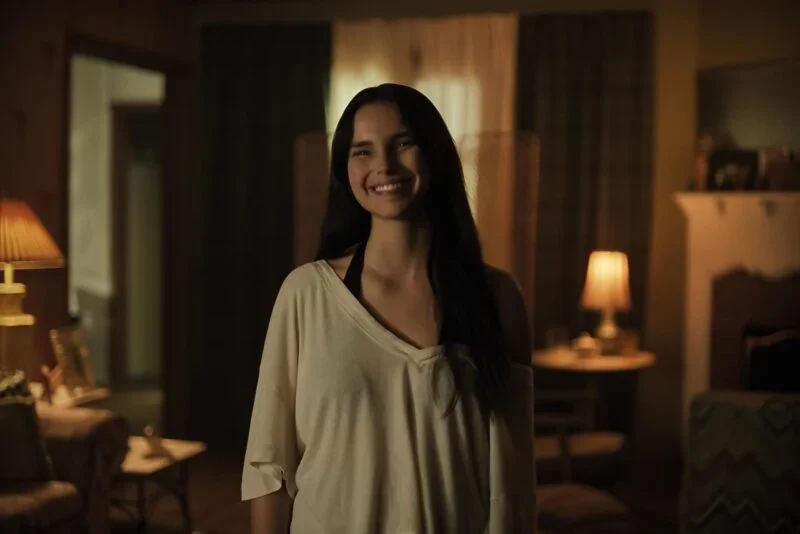
One Moment I can’t stop thinking about:
Nikki standing motionless in the house all day waiting for Bear to come home. The smile. The stillness. The way the scene stretches far past comfort. It’s one of those horror moments that works because the movie fully commits to silence and physical presence instead of relying on editing tricks. The image feels invasive.
Emotionally, the scene crystallizes the movie’s central fear: being loved too completely by someone who no longer feels human.
Structurally, it’s the moment where the film stops functioning like a supernatural thriller and starts feeling like psychological body horror.
Thematically, it exposes the real danger of Bear’s wish. Nikki no longer exists as a person with independent thought or emotional boundaries. She exists only in relation to him.
And that realization is way scarier than the monster-movie version of the premise.
Rewatch value: Better on rewatch. Can’t wait to see what streaming service picks this one up so I can enjoy it again soon.
Key takeaway:
Obsession is for horror fans who miss when mainstream studio horror actually trusted atmosphere, performance, and visual tension. If you’ve been frustrated by loud, disposable jump-scare movies lately, this feels like Blumhouse remembering what made audiences fall in love with films like Insidious, Sinister, and The Invisible Man in the first place.
