2026, James Watkins
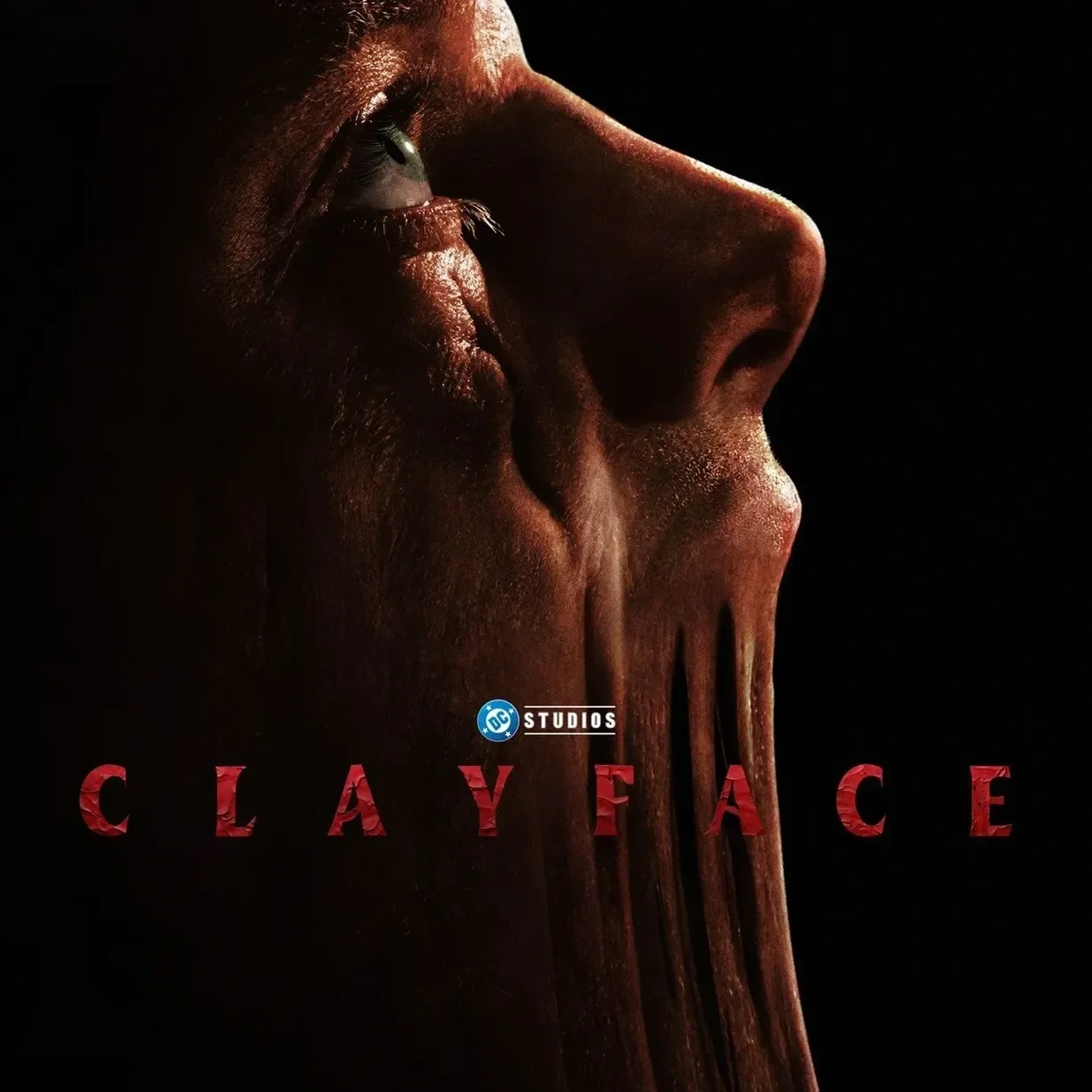
“A monstrous third act trapped inside an underdeveloped origin story”
Rating: 3.5 out of 5
How it sticks: Lingers
First Look
DC has been on an impressive streak with its villain-centered stories. Joker proved that a comic book villain could carry a technically ambitious, Oscar-worthy film, while The Penguin demonstrated just how much compelling material exists in the darker corners of Gotham. Compared with the uneven results of Sony's Marvel villain spin-offs like Morbius, Kraven the Hunter, and Venom, DC seems more willing to treat its villains as complicated characters rather than simply recognizable intellectual property. So when Clayface was announced, I had high hopes. A tragic villain origin story told through body horror? Sign me up.
As someone who loves The Substance, The Fly, and The Thing, I was especially excited to see what director James Watkins could accomplish with a relatively modest $44 million budget. And when Clayface works, it really works. Tom Rhys Harries is a fantastic choice for Matt Hagen, bringing charm, vulnerability, and a believable leading-man presence to a character whose identity is quite literally falling apart. Unfortunately, the film surrounding him doesn't always give that performance the room it deserves.
The first act rushes through Matt's life before we have much opportunity to understand what he's losing. The second stretches its experimental treatments and injections past the point of necessity. And then the third act arrives and delivers some of the most exhilarating horror filmmaking I've seen all year. It's a frustratingly uneven experience, with a nearly perfect finale attached to a character arc that never quite earns its destination.
On how it's made
Body Horror: Beauty in the Grotesque
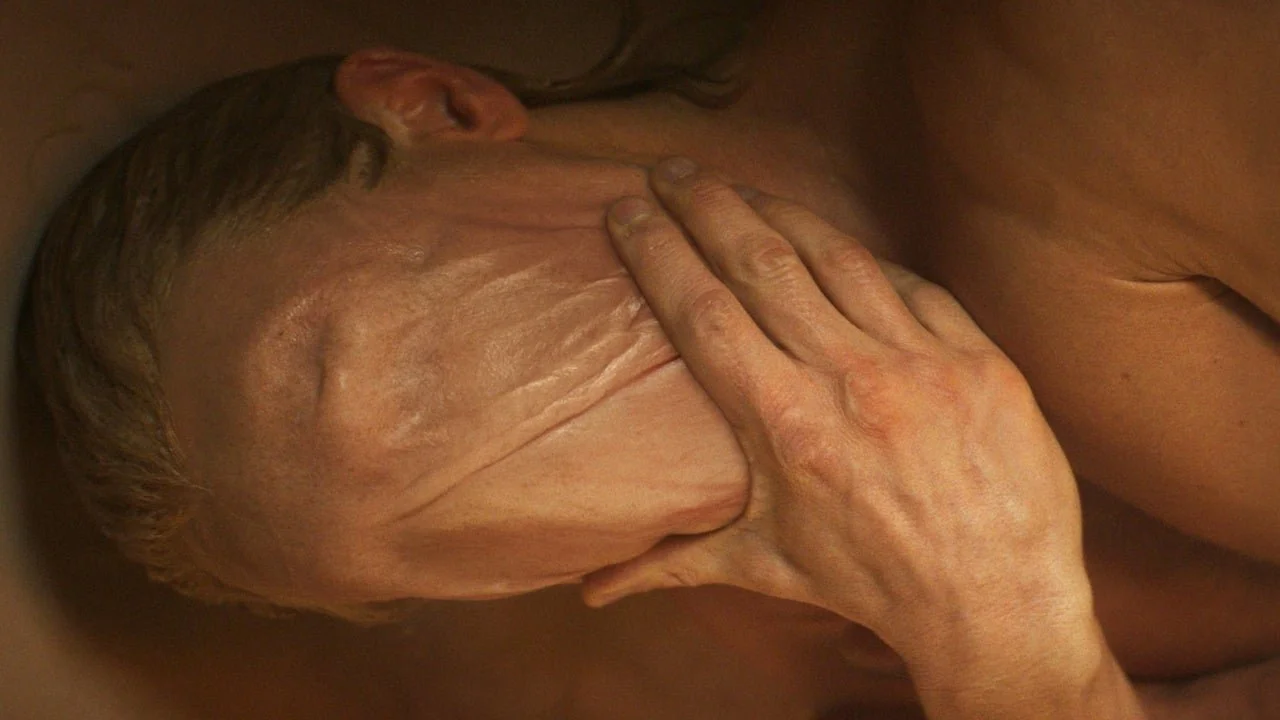
If there is one thing Clayface absolutely gets right, it's the body horror. The melting flesh, distorted facial features, gruesome medical procedures, and increasingly grotesque transformations are everything I wanted from this adaptation. The bandaged hospital imagery and face-cutting sequences are especially effective, making Matt's physical deterioration feel deeply uncomfortable rather than merely spectacular. And the moment he suffocates someone inside his own body? Disgusting. Brilliant. Exactly the kind of creative depravity this character deserves.

What makes these sequences even more impressive is the filmmaking behind them. Watkins emphasized practical effects throughout production, supplementing prosthetics and physical rigs with digital effects rather than relying entirely on CGI. In an interview with Variety, he explained that the body-absorption sequence used a specially constructed chest rig with a cavity that allowed another actor to be physically pulled inward. The production also experimented with roughly 19 iterations of Clayface's final creature design, searching for something monstrous that could still communicate the humanity beneath it.
That tactile quality makes an enormous difference. There's something uniquely unsettling about flesh that appears to have actual weight, resistance, and texture. The effects don't simply show us that Matt is transforming; they make us imagine how horrifying it would feel to inhabit his body. For a superhero-adjacent film operating on a fraction of the budget of many blockbuster productions, the craftsmanship is remarkable.

Cinematography: Too Much Motion, Not Enough Stillness
There are some genuinely fantastic compositions throughout Clayface, particularly when the film embraces the grotesque visual potential of its central character. The hospital imagery, distorted faces, and increasingly nightmarish environments demonstrate an understanding of how to make horror visually compelling. And the nightclub sequence is an absolute masterclass in coordinated movement, camera placement, and visual misdirection.
Watkins revealed that much of the nightclub's shapeshifting was accomplished through old-fashioned in-camera tricks. Actors would repeat movements across takes, allowing pillars and other foreground objects to conceal transitions between performers. It's the kind of clever filmmaking that makes a sequence feel seamless without sacrificing its physicality. Even more impressively, the complicated sequence was reportedly shot in days rather than weeks.
But outside those moments, I wanted the camera to linger more. There aren't enough still compositions, slow takes, or atmospheric pauses that allow us to sit with the horror. The film is so eager to move forward that it sometimes forgets how effective simply holding an image can be. Watkins has discussed drawing on German Expressionism, noir shadows, and the gritty street photography of earlier decades to build Gotham's visual identity. Those influences are evident in the production design, but I wish the camera had spent more time appreciating them.
Sometimes the most disturbing image is the one that refuses to cut away.
Performances: A Leading Man Without Enough Support
Tom Rhys Harries is easily the film's greatest asset outside its effects. He's handsome, charismatic, and believable as an aspiring star who has clawed his way out of difficult circumstances. More importantly, he makes Matt feel like an actual person before the transformations begin. There's a natural vulnerability to his performance that makes his disfigurement feel genuinely tragic.
Unfortunately, I found the supporting performances much less convincing, particularly Naomi Ackie as Dr. Caitlyn Corr. Her delivery often felt wooden and strangely restrained, even during moments that should have carried considerable emotional weight. Given how much of the film's middle section depends on their developing relationship, that lack of emotional energy becomes difficult to ignore.
Harries seems capable of delivering the psychological complexity the story demands, but the screenplay rarely gives him enough space to explore it. We hear about Matt's abusive father and troubled upbringing, yet those details never receive the development they deserve. His transformation from a sympathetic, ambitious young man into a vicious killer happens so quickly that the emotional groundwork feels incomplete. I believed in Matt Hagen. I just didn't always believe in how quickly he became Clayface.
Theory Moment
The most interesting thing about Clayface is that it's fundamentally a story about identity, specifically the relationship between our physical appearance and our understanding of who we are.
Matt is an actor. His face isn't merely part of his identity; it's his livelihood, his future, and arguably the thing that allowed him to escape his past. When that face is destroyed, he loses far more than his appearance. He loses the version of himself he worked so hard to become.
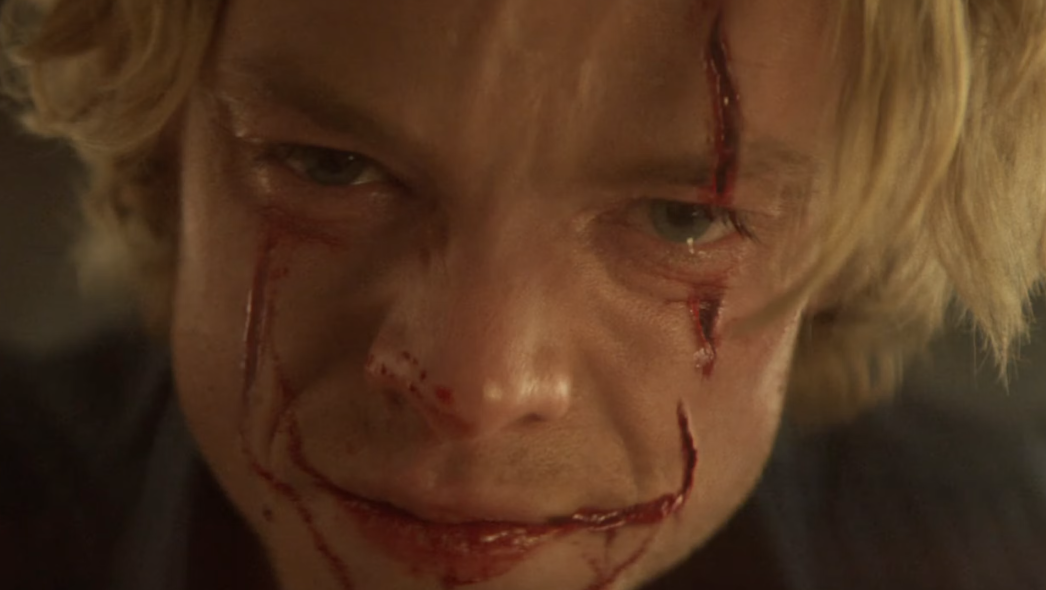
This is fertile ground for body horror, a genre that often explores the terrifying possibility that our bodies are not entirely under our control. Films like The Fly and The Substance understand that physical transformation becomes most disturbing when it reflects an internal psychological collapse. The body becomes a visible expression of something the character can no longer contain… and that's where Clayface loses me a little.
We understand intellectually why Matt would be devastated, but the film doesn't spend enough time making us feel that devastation. Consider Harvey Dent's hospital scene in The Dark Knight, where physical mutilation becomes inseparable from grief, betrayal, and moral collapse. Or Arthur Fleck's mirror dance in Joker, where the character's psychological transformation is communicated almost entirely through movement and performance. These moments allow us to witness a person becoming someone else.
Matt doesn't get an equivalent moment of emotional reckoning. His anger escalates, his body deteriorates, and eventually he begins killing, but the psychological transition feels more prescribed by the demands of a villain origin story than organically developed. Interestingly, Watkins has described the film's intended progression as a movement from desperation to retribution, followed by Matt's growing enjoyment of his newfound power. Original screenwriter Mike Flanagan conceived the story as a three-act tragedy.
I can see that ambition, but I don't think the finished film entirely achieves it. The tragedy of Clayface should be that we understand exactly how Matt becomes a monster, even as we desperately wish he wouldn't. Instead, I occasionally felt as though I had missed a few crucial scenes.
One Moment I Can't Stop Thinking About
The nightclub sequence. Obviously.
I genuinely think this is one of the best horror-action sequences of 2026. It's chaotic, inventive, disgusting, and unbelievably fun. The shifting identities, carefully choreographed camera movements, escalating violence, and constant uncertainty about who we're actually looking at create a kind of thrilling visual instability that feels perfectly suited to Clayface.
For the first time, the film fully realizes the terrifying possibilities of its central character. Every face becomes suspicious. Every movement could conceal another transformation. The audience is forced to constantly reevaluate what they're seeing, and that uncertainty becomes the sequence's greatest source of tension. You could feel the entire theater leaning into it.
What makes the scene so successful is that it finally allows the film's technical ambitions and narrative momentum to operate together. The camera tricks aren't just showing off. The transformations aren't simply effects demonstrations. Everything contributes to the same escalating nightmare.
And the brutality that follows, particularly the final kill, is absolutely vicious. I loved it.
Why It Matters
The nightclub sequence represents everything I wanted Clayface to be from the beginning: technically ambitious, unapologetically grotesque, and willing to take the darker possibilities of its comic book origins seriously.
It also highlights the film's biggest structural weakness.
The first act desperately needs more breathing room. We barely get to know Matt before his life is destroyed, leaving his backstory feeling more like exposition than lived experience. The second act, meanwhile, spends so much time on repeated treatments and injections that the pacing begins to stall. I would have loved another substantial horror-action sequence somewhere in that middle stretch, something that could simultaneously demonstrate Matt's emerging abilities and accelerate his psychological deterioration.
Instead, the film spends too long preparing for a transformation that still manages to feel rushed. And that's the frustrating contradiction at the center of Clayface: it takes too long to get to the good stuff while somehow not spending enough time developing the character.
I don't need every villain to be sympathetic, and I certainly don't need every act of violence to be justified. But if a film wants me to experience a character's descent as tragedy, it needs to make that descent emotionally convincing. Clayface gives us the physical transformation in spectacular detail while leaving too much of the psychological transformation to our imagination.
Still, I admire DC's willingness to make a film like this. A relatively modestly budgeted, R-rated body-horror tragedy about a lesser-known Batman villain is exactly the kind of creative risk that comic book filmmaking needs more of. Even with its flaws, Clayface feels like a filmmaker's movie rather than another installment engineered around franchise obligations.
Rewatch Value: Better on Rewatch — with a caveat. I would absolutely watch the third act again. In fact, I could probably watch that nightclub sequence several more times just to appreciate the choreography, transformations, and practical camera tricks. The first two acts? I'm less enthusiastic. Knowing where Matt's story ultimately goes might make some of the earlier details more interesting, but I suspect the pacing problems would become even more noticeable. This is one of those rare films where I would happily skip ahead to the finale without feeling like I had missed much.
Key Takeaway
Clayface is a visually inventive, wonderfully grotesque addition to DC's growing collection of villain-centered stories, elevated by a fantastic Tom Rhys Harries performance and an absolutely phenomenal third act. Unfortunately, its rushed character development and sluggish middle prevent it from achieving the psychological tragedy it so clearly wants to be.
Come for the body horror. Stay for the nightclub. Just don't expect the emotional transformation to be quite as convincing as the physical one.