Resident Evil
2026, Zach Cregger
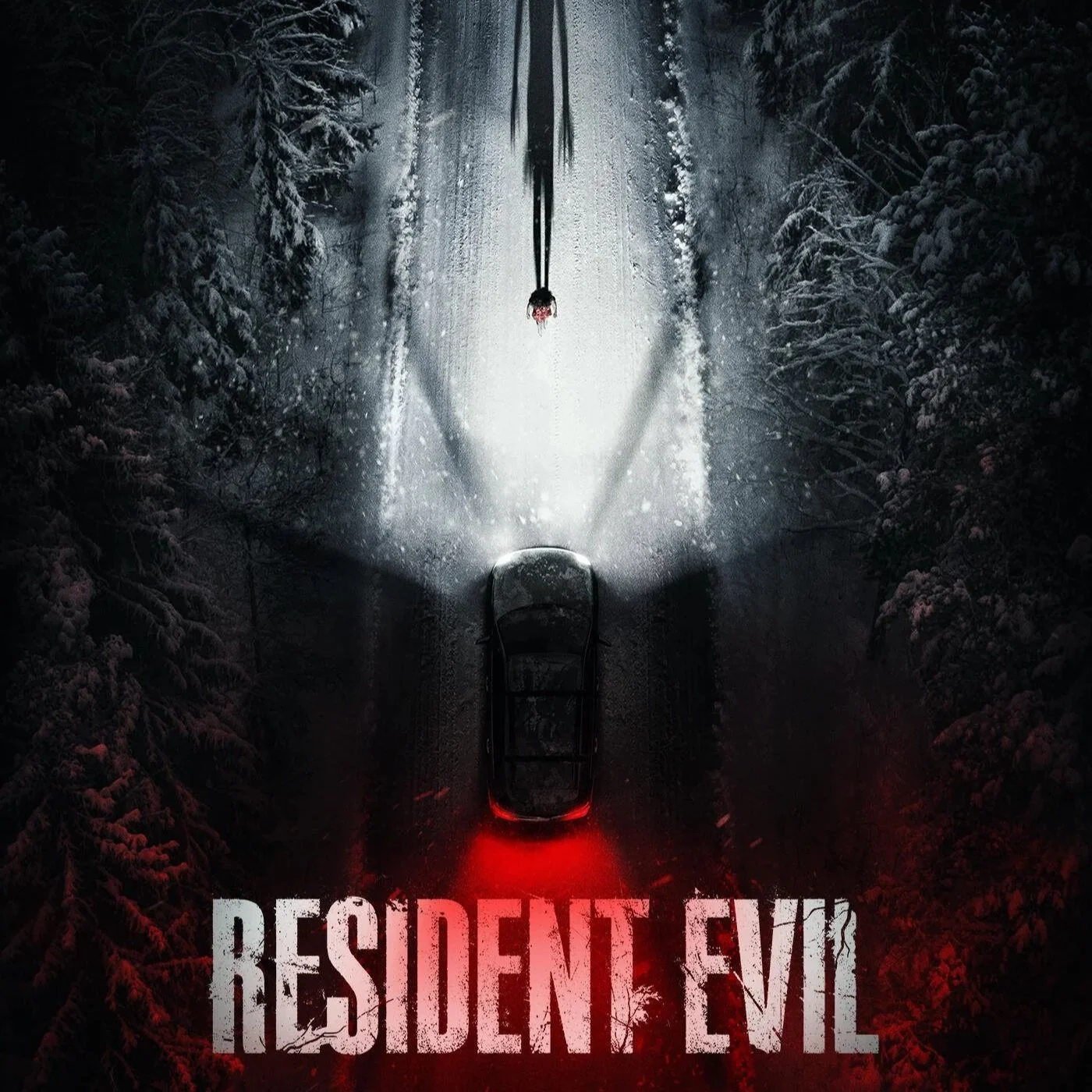
“It took this long to get a genuinely good Resident Evil movie?”
Rating: 4 out of 5
How it sticks: Lingers
First Look
Zach Cregger’s Resident Evil understands something that seems obvious but has somehow eluded this franchise on film: adapting a video game is about more than borrowing its characters, monsters, and lore. You have to translate what it feels like to actually play it. Cregger does exactly that, turning Bryan’s increasingly disastrous night into something that operates on video-game logic while still feeling tangible enough that I could almost imagine myself as the unlucky medical courier sent straight into an Umbrella Corporation nightmare.
The result is less straightforward horror than a video-game thriller — tense, violent, funny, occasionally ridiculous, and constantly moving. Austin Abrams is a huge part of why it works. His humor and relatability keep the movie from becoming oppressively scary without ever completely puncturing the tension. He reacts to the increasingly absurd circumstances roughly how an actual person might, which somehow makes the monsters around him feel more believable.
On how it’s made
Camera work
Some of my favorite shots are the ones that make us feel like we’ve temporarily picked up the controller. The camera rounds corners with Bryan, sometimes sitting directly in his POV as a gun and flashlight enter the frame. These aren’t just cute references to the source material; they recreate the anxiety of navigating a Resident Evil game, where entering a new hallway means knowing that something might be waiting just outside your field of view.
That choice is especially fitting given Cregger’s approach to the adaptation. He has said that although he hadn’t watched the previous Resident Evil films, he grew up with the games and wanted this movie to mimic their survival-based progression and the feeling of playing them.
Video Game Logic
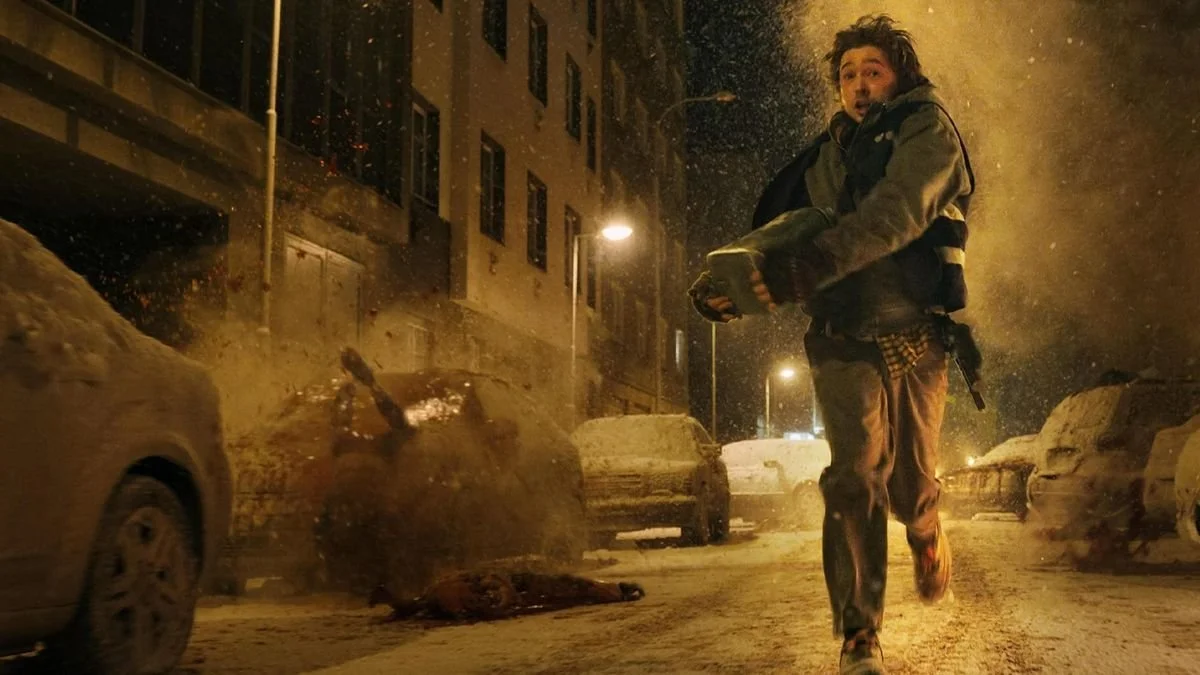
The movie keeps inventory. That sounds like such a small thing, but it delighted me. Bullets matter. Resources disappear. Bryan doesn’t magically become an action hero because the plot requires him to. He remains relatively clueless and has to figure out the rules as he goes.
Even the narrative structure starts behaving like a game. An intercom gives Bryan his next objective while providing essentially none of the practical assistance a normal person would demand. At some point, if someone told me over a speaker that my next task was to traverse 28 floors of a monster-infested hospital, I would simply be informing them that they were welcome to come get me. But Bryan goes… new objective unlocked!
Those details along with the game-accurate creature encounters and kills make the movie feel affectionate toward its source rather than embarrassed by it. Cregger understands that some of the absurdity is part of the fun.
Colors
For a movie spent largely running from grotesque creatures through darkness, Resident Evil is frequently beautiful. The police lights during the first major monster encounter flood the frame with blues and reds before the film settles into its recurring palette of deep reds, blacks, and heavy shadow.
It reminded me of what Cregger does so well in Barbarian and Weapons: he doesn’t treat horror imagery as something that has to be ugly simply because what’s happening is ugly. There are carefully composed images scattered between the scares, moments where the movie seems to briefly stop and remind you that someone is making deliberate visual choices here.
Theory moment
Resident Evil is an adaptation interested in translating form rather than plot.
There’s an inherent problem with adapting video games to film: playing and watching are fundamentally different relationships to an image. A game gives us agency. We decide whether to open the door, spend the bullet, investigate the hallway, or run away. A movie cannot give us those choices. So Cregger does the next best thing: he makes us feel the absence of that agency.
The POV compositions temporarily position us as the player. Limited ammunition gives every shot consequence. Bryan receives objectives as if someone has handed him a mission prompt. The hospital becomes a level to traverse rather than simply a setting. But unlike a game, we can’t move Bryan ourselves.
That creates a strange tension between participation and helplessness. We recognize the rules of the game while being completely unable to play it. And because Bryan is not some hypercompetent action hero, the identification works even better. He’s basically us: confused, underprepared, increasingly irritated, and wondering why the hell nobody else is handling this.
One Moment I can’t stop thinking about:
The headlights disappearing down the dark, snowy road. It’s not the biggest monster reveal or the most elaborate scare in the movie. It’s just a car getting farther away until those tiny points of light disappear into darkness… and it’s gorgeous.
There’s something deeply ominous about watching the last obvious sign of safety become smaller and smaller until it’s simply gone. The image accomplishes what the movie’s best cinematography does throughout: it makes isolation beautiful enough that you almost forget how frightening it is.
That shot encapsulates why this version of Resident Evil works for me. Cregger doesn’t rely solely on recognizable monsters, gore, or jump scares to prove that he understands horror. He lets the atmosphere do some of the work.
And then, importantly, he still gives us the monsters.
The film doesn’t spend ninety minutes teasing creatures that it refuses to show. We get a variety of recognizable Umbrella horrors, we get jump scares, we get violence, and we get the kind of increasingly absurd escalation that belongs in Resident Evil. But those pleasures exist alongside images that are carefully composed enough to stick around after the adrenaline wears off.
The combination of genuine visual authorship paired with a willingness to embrace the ridiculousness of the material is exactly what a Resident Evil movie needed.
Rewatch value: Better on rewatch — The first viewing is propelled by discovering what nightmare Bryan is going to encounter next. A second viewing would be for everything happening around those encounters: the POV construction, ammunition and inventory tracking, color choices, environmental clues, and all the little ways Cregger quietly recreates the language of the games. Knowing where Bryan is headed might actually make it more fun to watch how carefully the movie gets him there.
Key takeaway:
Resident Evil finally understands that faithfully adapting a video game doesn’t mean reproducing its plot. It means finding a cinematic equivalent for the experience of playing it. Zach Cregger gives us monsters, jump scares, ridiculous objectives, limited resources, gorgeous horror imagery, and Austin Abrams reacting to all of it like a normal guy who desperately wishes someone else had gotten this delivery assignment.
It took long enough. Thank you, Zach Cregger.
