The Odyssey
2026, Christopher Nolan
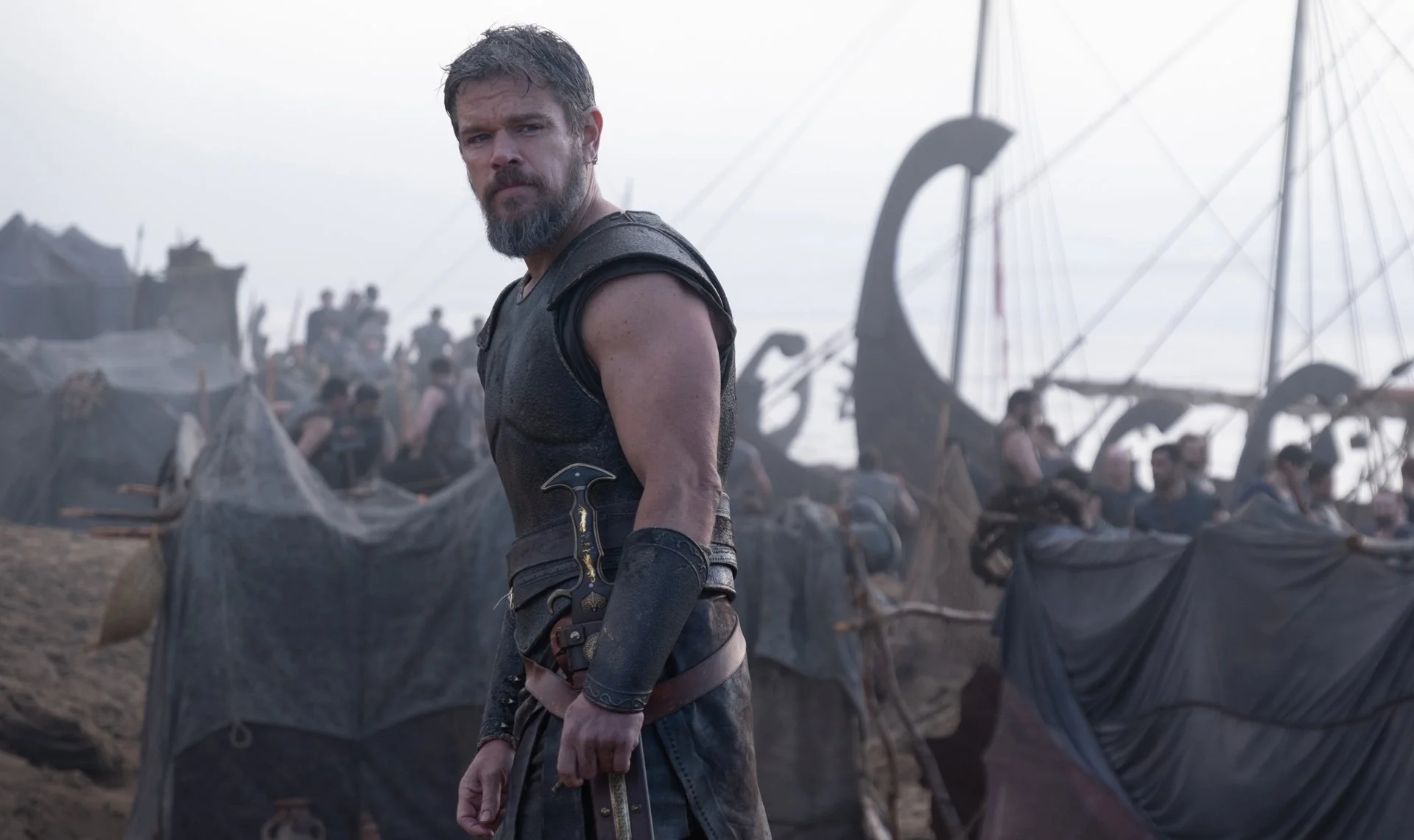
“What if the world’s oldest adventure story were given the biggest screen imaginable?”
Rating: 4.5 out of 5
How it sticks: Echoes — I kept returning to its scale, landscapes, and Robert Pattinson’s performance
First Look
Christopher Nolan has had a historic run of getting people into theaters to experience his particular brand of cinematic spectacle. From The Dark Knight and Inception to Oppenheimer, he has convinced audiences that some movies still demand the biggest screen and loudest speakers available. The Odyssey continues that run with a film that feels built specifically for the theater.
There is something slightly absurd about the prestige now attached to appearing in a Nolan movie. Every cast announcement feels like another celebrity receiving an invitation to the Capitol in The Hunger Games. Being cast in his latest film has become its own status symbol.
Fortunately, the massive ensemble is not merely there to decorate the poster. The film is well cast across the board, and most of the performances feel surprisingly natural despite the mythic scale of the material. Matt Damon is an excellent choice for Odysseus, grounding the story in exhaustion, determination, and humanity.
This is a movie for Nolan fans and action fans more than historians or devoted readers of Homer. There are several major discrepancies from the original poem. If you can suspend your disbelief and allow Nolan to tell his version of the story, though, you are going to have a great time.
On how it’s made
Cinematography
The landscapes are the film’s greatest technical achievement. Odysseus and his crew are repeatedly dwarfed by seas, cliffs, caves, and distant horizons. The world feels vast, surreal, and genuinely difficult to cross.
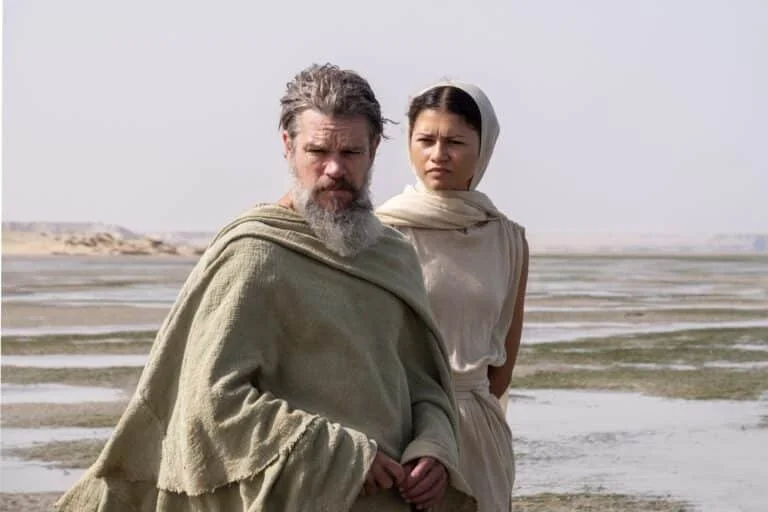
The production filmed across Morocco, Greece, Italy, Scotland, Iceland, Malta, and Western Sahara. Aït Benhaddou in Morocco became Troy, while the Italian island of Favignana stood in for Ithaca. Greece supplied coastlines and caves, and Iceland’s volcanic terrain helped create the film’s more alien environments.
Shooting on location was exactly the right choice. The landscapes do not feel like attractive backgrounds placed behind the actors. Wind, water, fire, and distance become physical forces within the story. A journey like this should feel enormous, dangerous, and almost impossible. Nolan and cinematographer Hoyte van Hoytema accomplish that.
The lighting is equally effective. Daylight scenes expose the characters beneath an unforgiving sun, while darker interiors rely heavily on fire and torchlight. Faces emerge from the darkness in flickering shades of bronze and orange. The contrast gives the movie an ancient, almost elemental quality without making it feel like a polished museum recreation.
Score
Ludwig Göransson’s score avoids the traditional orchestral sound expected from a historical epic. Nolan reportedly asked him to use “no orchestra” and “no familiar sounds,” leading Göransson to build the score from ancient instruments, synthesizers, metallic textures, and dozens of bronze gongs.
The result feels heavy, unfamiliar, and slightly threatening. It does not simply announce when something epic is happening. It makes the world itself sound unstable. The music works especially well during the battle and maritime sequences, where it becomes almost inseparable from the physical force of the action.
Storyline Structure
The nearly three-hour runtime is paced remarkably well. The movie balances its battles and action sequences with flashbacks to Calypso’s island and Ithaca, allowing the story to move between spectacle and the emotional consequences of Odysseus’s absence.
Nolan also resists treating the journey as a simple sequence of obstacles. The nonlinear structure connects each stage of the voyage to Odysseus’s memories, guilt, and desire to return home. Even when the movie departs from Homer, it maintains a clear emotional center.
The discrepancies will frustrate some viewers. Nolan reshapes characters, rearranges parts of the journey, and reduces the direct role of the gods. This is not a faithful visualization of the poem. It is a Nolan adaptation of the poem, complete with his familiar interests in war, memory, time, and responsibility.
Performances
Matt Damon was a great choice for the title role. His performance is physical without feeling showy, and he gives Odysseus the weariness necessary to hold the film together. He feels like someone who has survived a war and is slowly realizing that survival does not mean he escaped its consequences.
The rest of the cast is strong, and the performances generally feel natural despite the exaggerated world surrounding them.
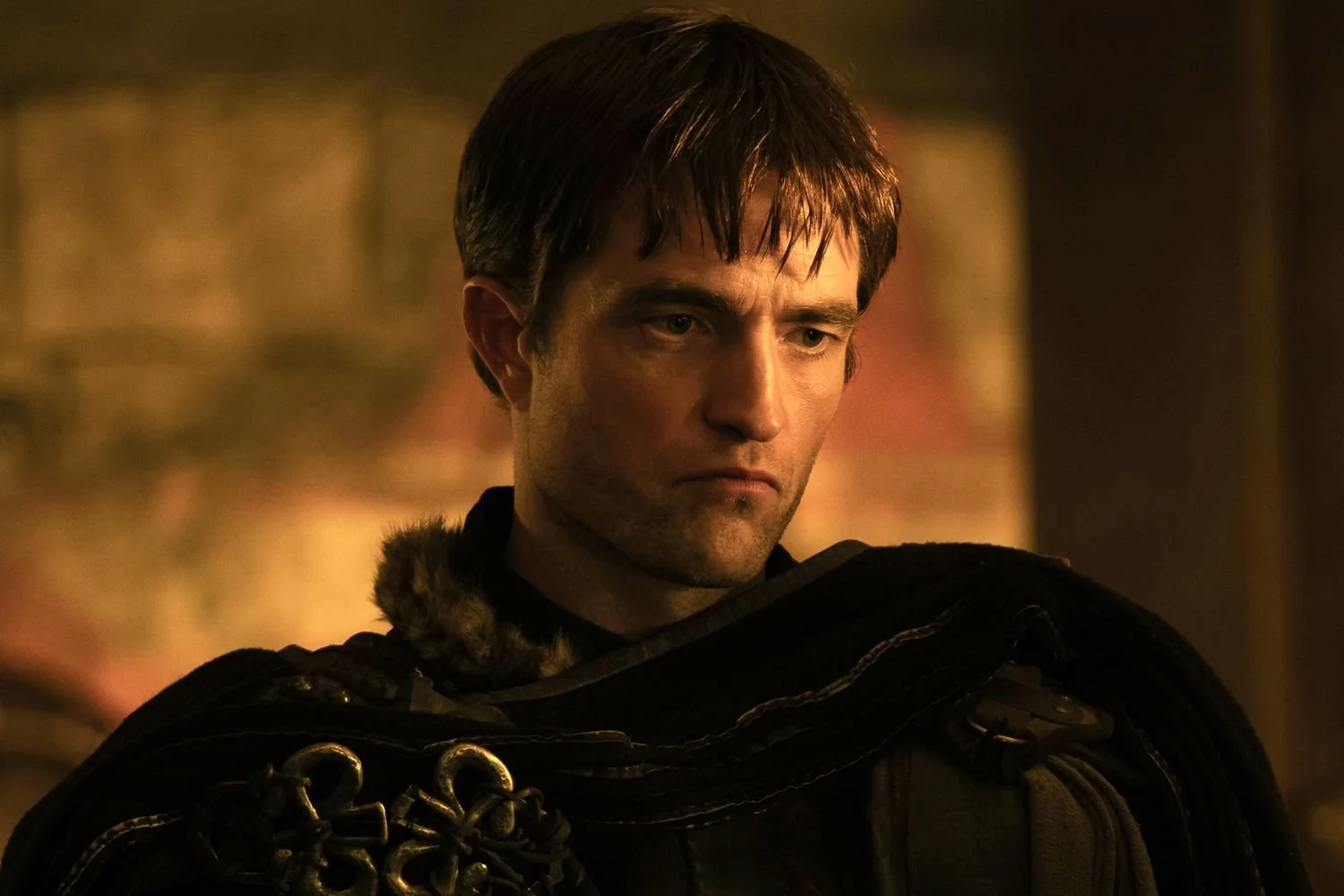
But I cannot overstate how much I enjoyed Robert Pattinson.
His performance is theatrical, strange, and at times almost satirical. He occasionally seems to be acting in a slightly different movie from everyone around him. That can pull attention away from the plot, especially when the rest of the cast is playing the material with greater restraint.
Still, I could not look away. Pattinson completely commits to every choice, making the role both disruptive and unforgettable. He steals every scene Nolan gives him, and he should be proud of it.
Theory moment
What is the movie quietly obsessed with?
The difference between heroism and survival.
Homer’s Odysseus is famously defined by his cunning, but Nolan is more interested in what remains after the clever hero wins the war. This version of Odysseus is not simply trying to return home. He is carrying Troy with him.
That shift makes the movie feel less like a straightforward celebration of a legendary hero and more like an examination of what war does to the people who survive it. The monsters and mythical landscapes may be spectacular, but the real journey involves Odysseus confronting the consequences of the man he became during the war.
This is also where the adaptation will divide audiences. Nolan uses Homer’s story to explore themes that belong to his own body of work. For his fans, that will be part of the appeal. For purists, it may feel like the film is replacing the poem’s ideas with Nolan’s.
One Moment I can’t stop thinking about:
Robert Pattinson’s first major appearance.
The performance immediately changes the energy of the movie. His physicality, delivery, and almost satirical theatricality feel deliberately larger than everything around him. The moment threatens to pull us out of the story because Pattinson draws so much attention to himself, but that is also exactly why it remains memorable.
Emotionally, the scene introduces an unpredictable energy into a movie otherwise grounded by Damon’s restraint.
Structurally, it briefly interrupts the solemnity of Odysseus’s journey and reminds us that myth has always contained exaggeration, performance, and larger-than-life personalities.
Thematically, Pattinson’s theatricality complicates Nolan’s attempt to make the story feel realistic. His performance belongs less to history than to legend.
I still cannot decide whether it works perfectly or works because it is so impossible to ignore. Either way, it was one of my favorite parts of the movie.
Rewatch value: Definitely worth revisiting, particularly in a theater. I would happily watch it again as soon as I have another three hours to spare.
Key takeaway:
The Odyssey is for Nolan fans, action fans, and anyone who still wants movies to feel like major theatrical events. Historians and devoted readers of Homer may struggle with its departures from the original poem, but viewers willing to suspend their disbelief will find an expertly crafted epic with immense landscapes, impressive battles, natural performances, and a score that gives the ancient world an unfamiliar sound.
A story as enormous as The Odyssey needed a huge cast, a huge budget, and a filmmaker willing to match its scale. Nolan achieved exactly that.
