Hurry Up Tomorrow
2025, Trey Edward Shults
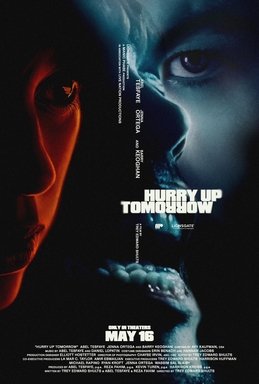
“A breathtaking visual album trapped inside a feature film.”
Rating: 0.5 out of 5
How it sticks: Cut on credits — gone immediately
First Look
The most impressive thing I can say about Hurry Up Tomorrow is that the music is phenomenal (of course… it’s The Weeknd), and the visuals are genuinely breathtaking. What I cannot understand is how a visual concept this compelling was paired with a screenplay that barely qualifies as a story. The film follows Abel Tesfaye playing a fictionalized version of himself — an insomniac pop star unraveling after losing his voice on stage, descending into addiction, paranoia, and a psychological break while pursued by a mysterious fan named Anima. It sounds like fertile ground for a psychological thriller, but instead the film mistakes ambiguity for depth. By the end, I wasn't wondering what was real and what wasn't — I was wondering why I spent money to watch it.
On how it’s made
Visuals
The irony is that Hurry Up Tomorrow is directed by Trey Edward Shults, whose films (Waves, It Comes at Night) are known for expressive camerawork and emotionally charged visual storytelling. Here, he reunites with cinematographer Chayse Irvin, shooting on a combination of 35mm, 16mm, and Super 8 film to create a hazy, dreamlike aesthetic that constantly blurs memory, fantasy, and reality.
And visually, it works. The saturated reds and blues, the floating camera movements, the fractured reflections, the constantly shifting aspect of reality — it all perfectly communicates the instability of Abel's mental state.
The problem is that these images never build toward anything. Cinema isn't just a collection of beautiful shots; it's the accumulation of meaning through narrative. Hurry Up Tomorrow gives us image after image worthy of framing on a wall, but almost none of them deepen the characters or move the story forward. The visuals become the destination instead of the vehicle.
Music
Unsurprisingly, the soundtrack is exceptional. The score, composed by Abel Tesfaye alongside Daniel Lopatin, creates an immersive sonic landscape that often carries scenes emotionally when the screenplay cannot.
Ironically, the music also exposes the film's biggest flaw.
This never feels like a movie. it feels like an expensive visual companion to an album. Every sequence is constructed like an extended music video, prioritizing mood, symbolism, and aesthetic over dramatic progression. That approach works beautifully across four or five minutes, where emotional impression is enough. Over the course of a 105-minute feature, however, the lack of narrative architecture becomes impossible to ignore.
Theory moment
The film is obsessed with celebrity as self-imprisonment. Abel's public persona consumes his identity until he can no longer distinguish performance from authenticity, fame from isolation, or audience from intimacy.
That's an interesting idea… BUT
The movie seems far more interested in admiring that image than interrogating it. So much of the dialogue exists simply to convince us that Abel is a profound, tortured artist. Rather than earning that characterization through dramatic conflict, the screenplay repeatedly tells us how haunted he is until it begins to feel less introspective than self-congratulatory.
Jenna Ortega's Anima suffers the most from this approach. Whether she's meant to be a real obsessive fan, a projection of Abel's guilt, or some combination of both remains deliberately unclear, but ambiguity only works when every interpretation reveals something meaningful. Here, her character feels less like a fully realized person than a device constructed to orbit Abel's emotional mythology.
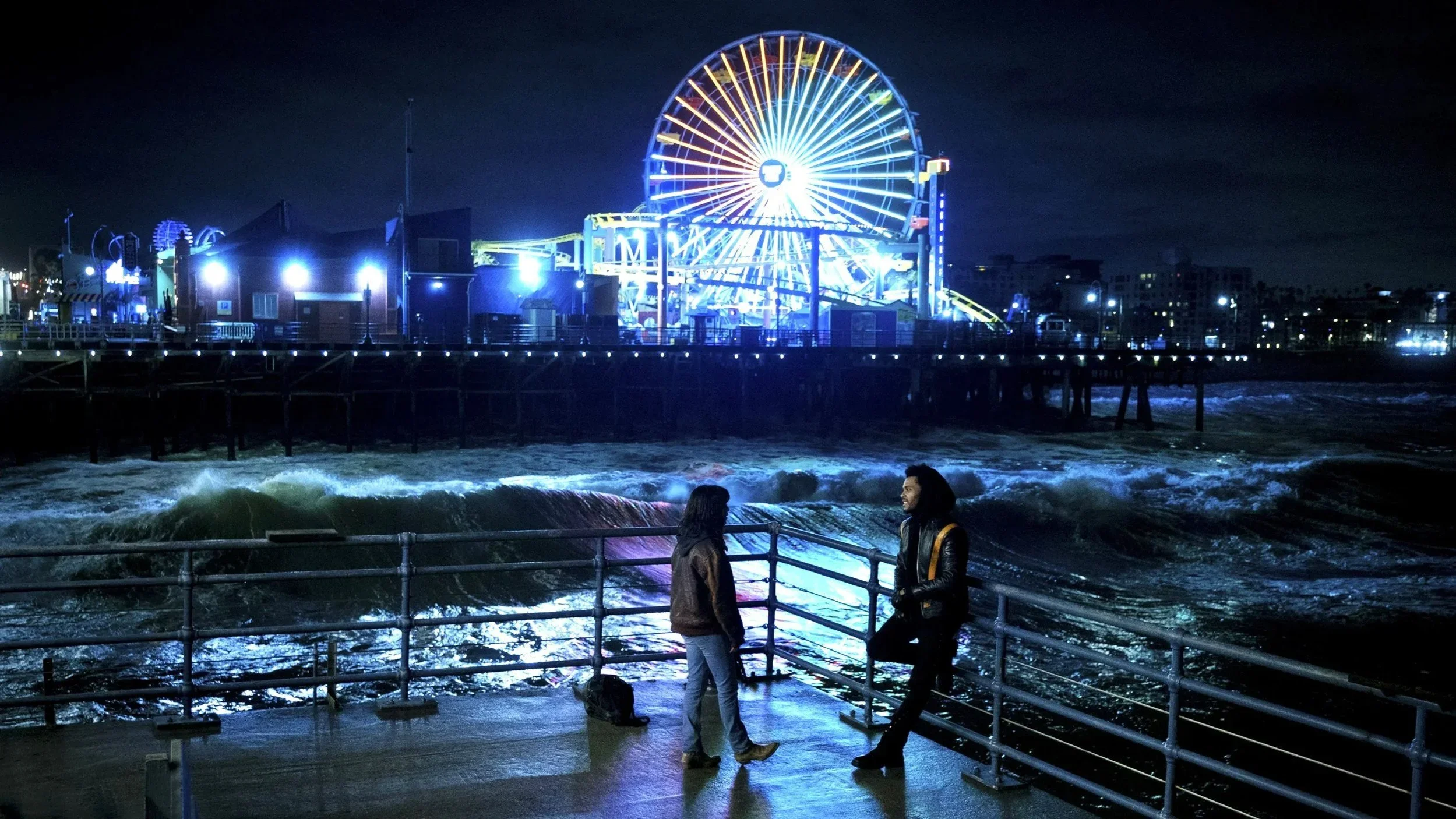
One Moment I can’t stop thinking about:
The inverted tracking shots of Abel's limousine gliding through an empty city at night.
It's one of the rare moments where form and feeling become inseparable. The upside-down perspective transforms a familiar city into something alien, reinforcing Abel's psychological disorientation while emphasizing the loneliness that accompanies superstardom. It's a reminder that everyone involved clearly possessed remarkable visual instincts.
I just wish they'd spent as much time writing the story as they did composing the frame.
Rewatch value: None.
Key takeaway:
If you're already invested in The Weeknd's music and mythology, you'll probably find plenty to appreciate in the soundtrack and imagery. For everyone else, I'd recommend simply listening to the album and watching the music videos. They accomplish nearly everything this film is trying to do in a fraction of the time.
And don't even get me started on Barry Keoghan. I've watched him disappear into roles before, and he's one of the most compelling actors working today. Here, even he can't overcome dialogue that feels stiff, performative, and painfully artificial. If actors of Barry Keoghan and Jenna Ortega's caliber struggle to make the material believable, the problem isn't the performances… it's the writing.
Hurry Up Tomorrow ultimately mistakes atmosphere for storytelling. It is visually intoxicating, sonically mesmerizing, and dramatically hollow. As a feature film, it collapses under the weight of its own self-importance. As a collection of interconnected music videos, it might have been extraordinary.
