Close-Ups and Comic Precision in Back to the Future
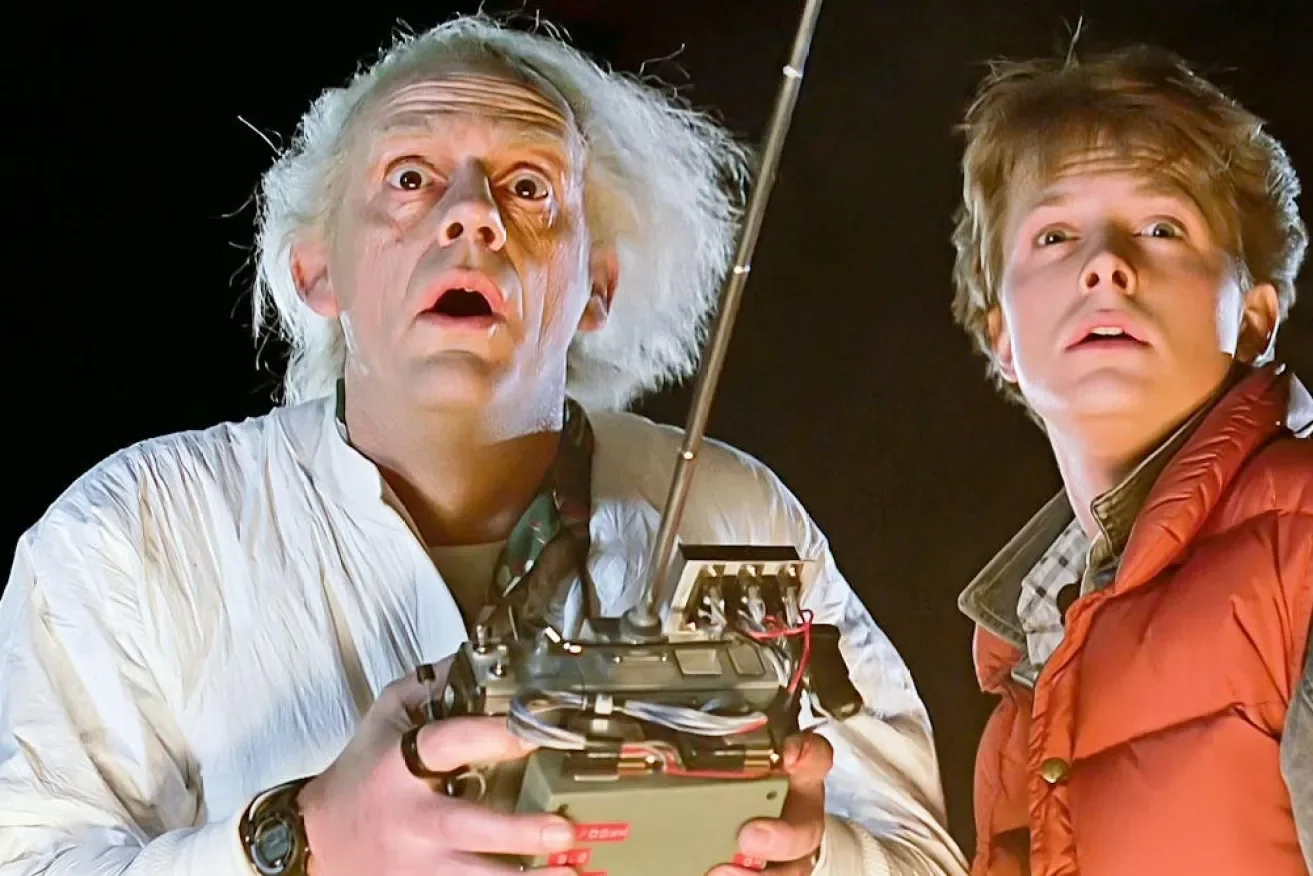
Few films balance narrative ingenuity and crowd-pleasing humor as seamlessly as Back to the Future. Directed by Robert Zemeckis, the film is often celebrated for its inventive time-travel premise and tightly constructed script. Just as important, though, is its attention to performance and form. Much of the film’s comedy does not come from dialogue alone, but from how that dialogue is framed. In several key moments, close-ups isolate Marty McFly’s reactions, allowing small acting choices to elevate otherwise simple lines into memorable comedic beats.
Early in the film, after Marty plugs his guitar into Doc Brown’s massive amplifier, the resulting blast sends him flying backward into a shelf. The aftermath is captured in a tight close-up (04:40–04:44). Covered in dust and gripping his sunglasses, Marty looks offscreen toward the amp with raised eyebrows and a flicker of amusement before delivering the understated line, “Rock and roll.” The humor here depends on contrast. The physical gag is explosive, but Marty’s reaction is subdued and self-aware. By holding on his face, the film directs our attention to the slight eyebrow raise and the beginnings of a smile. These details signal that Marty himself finds the moment funny, inviting the audience to laugh with him rather than at him. A wider shot might preserve the physicality of the gag, but it would lose the subtle expression that reframes it as character-driven humor.
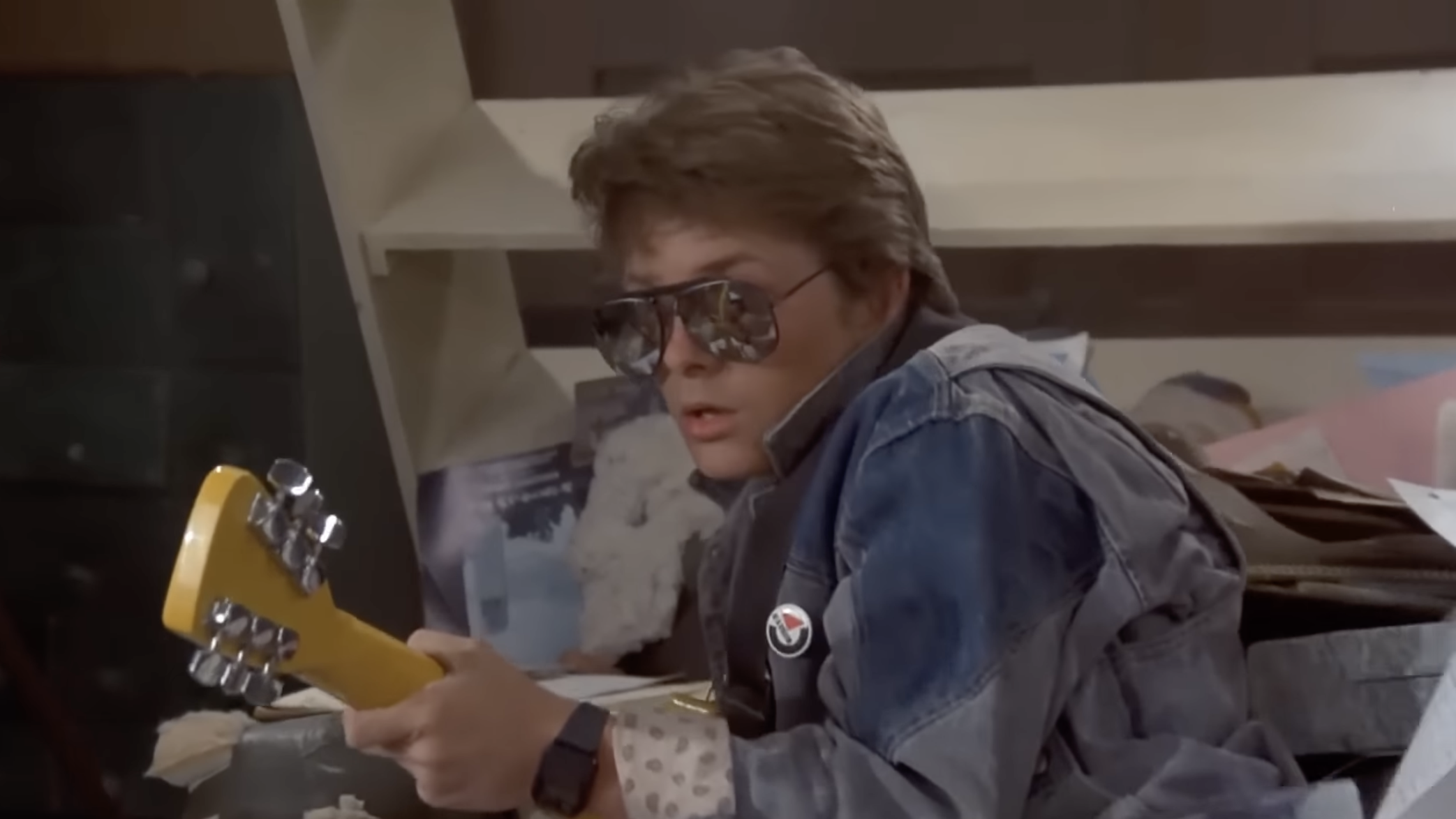
“Rock and roll” 04:40-04:44
A similar strategy appears later when Marty encounters Goldie Wilson in the 1950s. Knowing that Goldie will eventually become mayor, Marty enthusiastically declares, “That’s right! He’s gonna be mayor!” The line is delivered in close-up (40:37–40:39), with Marty leaning forward, widening his eyes, and raising his eyebrows as he points toward Goldie. The humor stems from dramatic irony. Marty is completely sincere, while everyone around him interprets his statement as speculation. The close-up sharpens this irony by emphasizing Marty’s certainty. His facial expressions and body language convey absolute confidence, reinforcing his position as the only character who understands the future. Without this proximity, the performance would read as exaggerated; with it, the exaggeration becomes the joke.
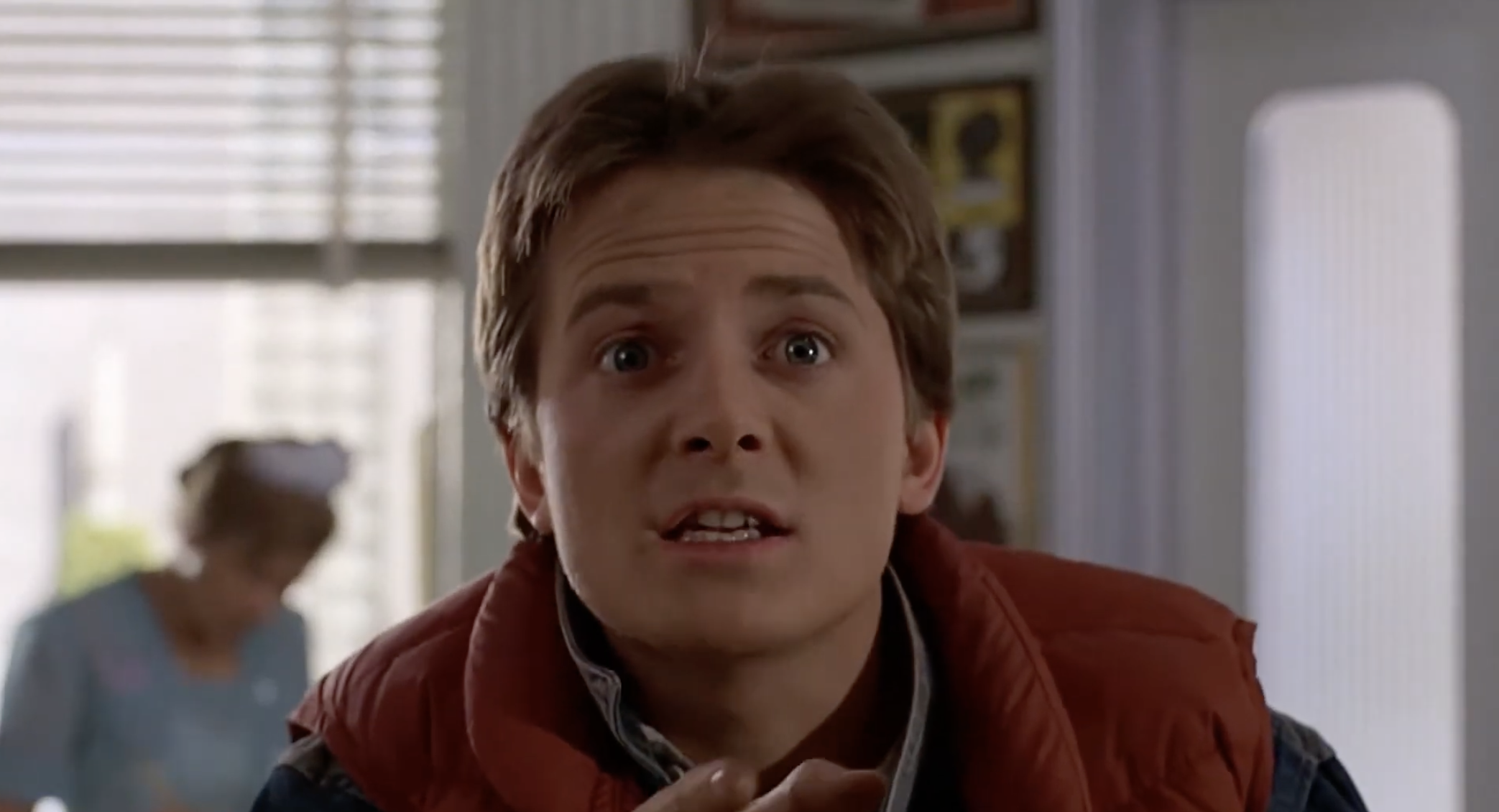
“He’s gonna be mayor!” 40:37-40:39
The film returns to this technique in one of its most famously uncomfortable scenes. After Lorraine kisses Marty at the Enchantment Under the Sea dance, she remarks that it feels like kissing her brother. The camera cuts to a close-up of Marty at 1:20:04–1:20:11 as he scrambles upright, visibly shaken, and insists, “Believe me—it makes perfect sense!” His delivery is layered with small gestures: raised eyebrows, a slight head shake, and a nervous chuckle. These nuances reveal that Marty is acutely aware of the absurdity and discomfort of the situation, even if Lorraine is not. Again, the humor depends on the audience recognizing this awareness. The close-up ensures that we do not miss it.
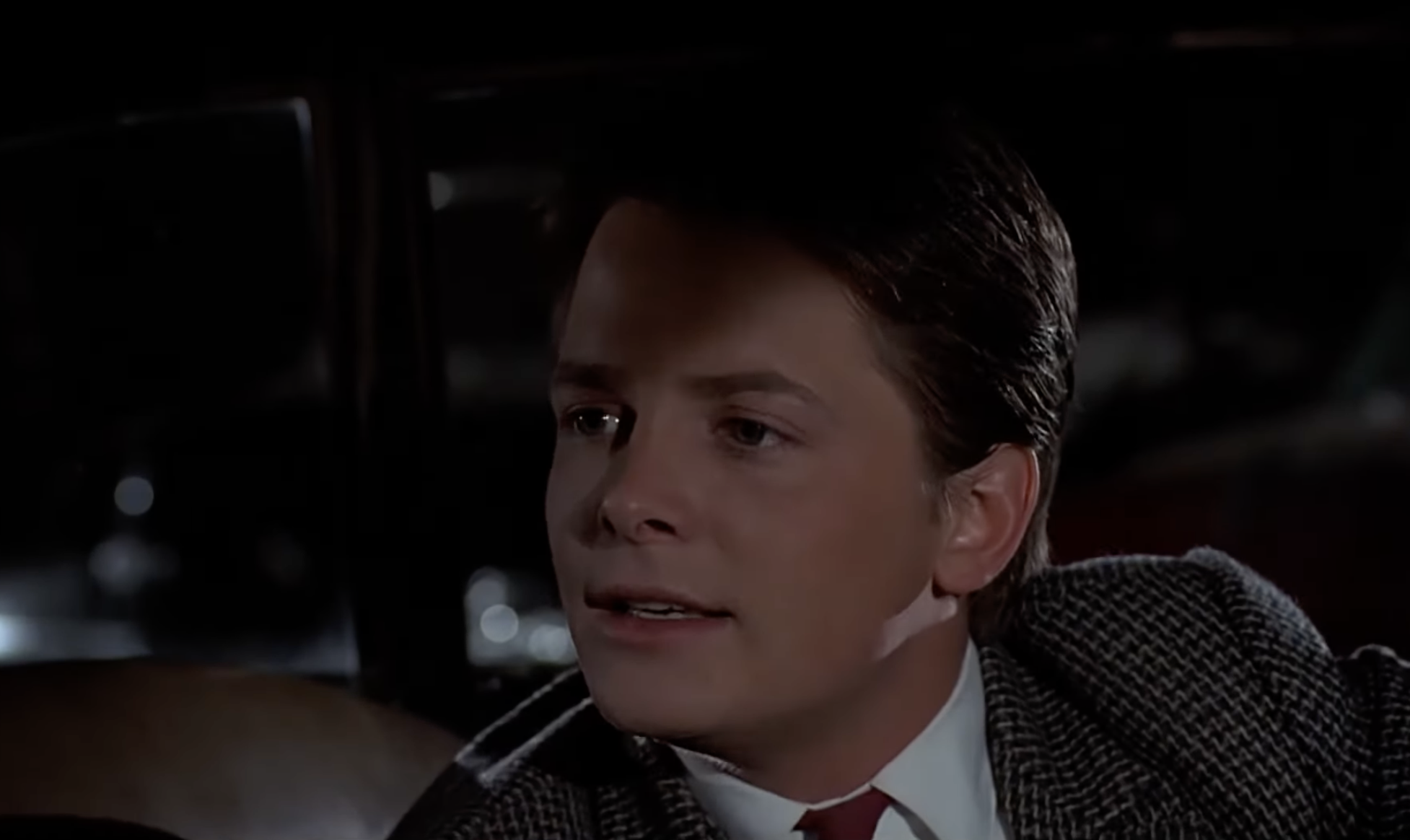
“It makes perfect sense” 1:20:04-1:20:11
Across these moments, Michael J. Fox’s performance is doing precise comedic work, but it is the camera that allows that work to land. By consistently using close-ups at key moments, the film narrows our focus to Marty’s face, turning minor expressions into punchlines. The result is a style of comedy that feels both controlled and spontaneous, where the smallest shift in expression can carry the joke.
