Framing Control in His Girl Friday
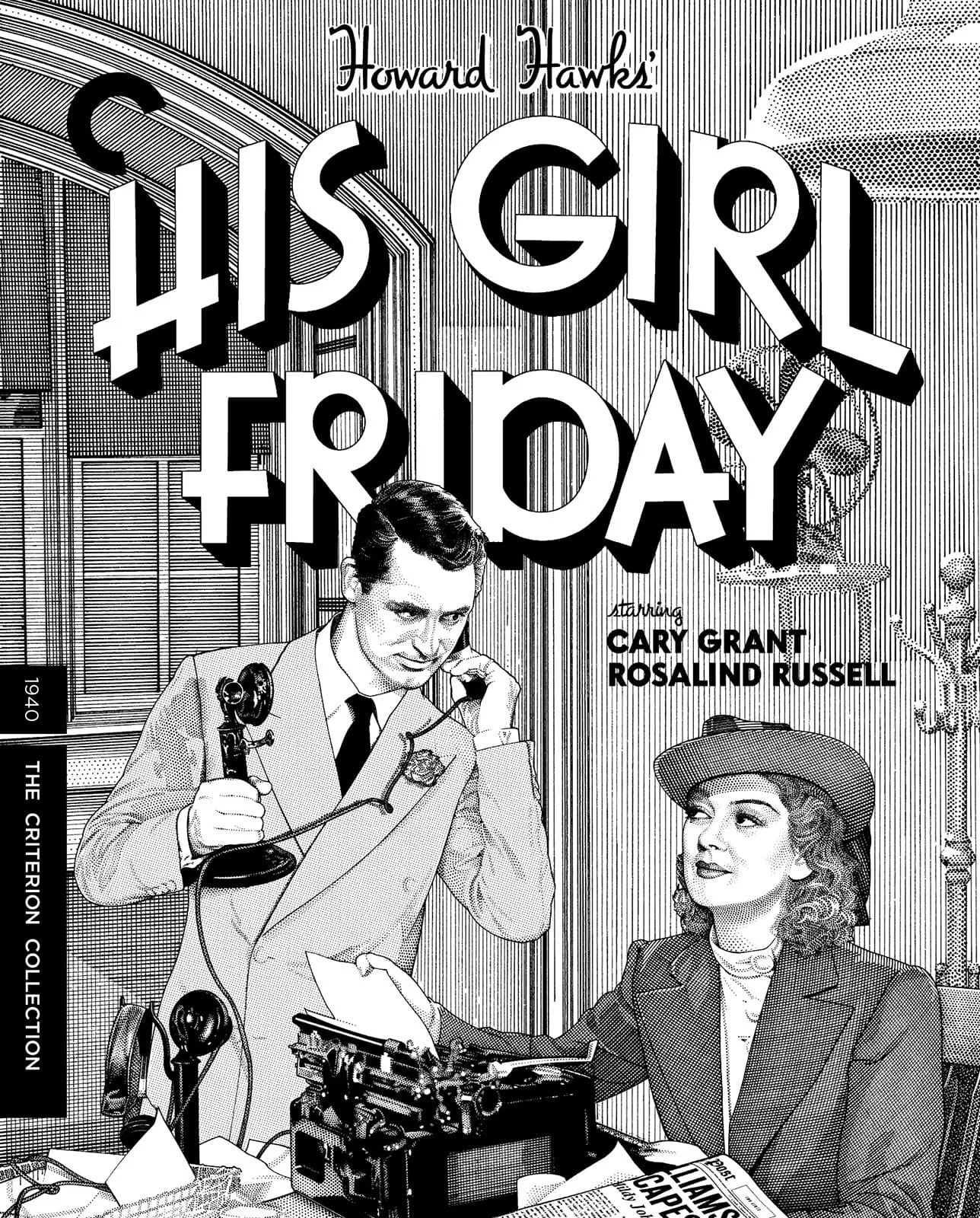
Released in 1940, His Girl Friday is widely regarded as one of the defining works of classical Hollywood comedy, known for its rapid-fire dialogue, overlapping speech, and razor-sharp depiction of journalism. Directed by Howard Hawks, the film follows star reporter Hildy Johnson as she plans to leave the newspaper business and remarry, only to be pulled back in by her editor and ex-husband Walter Burns, whose manipulative charm and relentless scheming blur the line between professional ambition and personal desire. Set largely within the chaotic confines of a press room, the film turns speed and space into storytelling tools. Within this environment, even the briefest moments carry weight. One such moment, a five-second shot during the press room sequence, reveals how precisely the film uses framing and camera movement to articulate the shifting emotional dynamic between Walter and Hildy.
The shot begins as Louie turns to Hildy, continuing his attempt to justify leaving Mrs. Baldwin at the scene of the car crash. All three characters are framed in medium shot. Hildy interrupts him, groaning, “Dead, dead. Oh, this is the end! Oh!” As she speaks, she quickly exits frame left, eager to escape a conversation that is becoming increasingly distressing. Her movement suggests rising panic, as she begins to fear that her actions may have led to Mrs. Baldwin’s death.
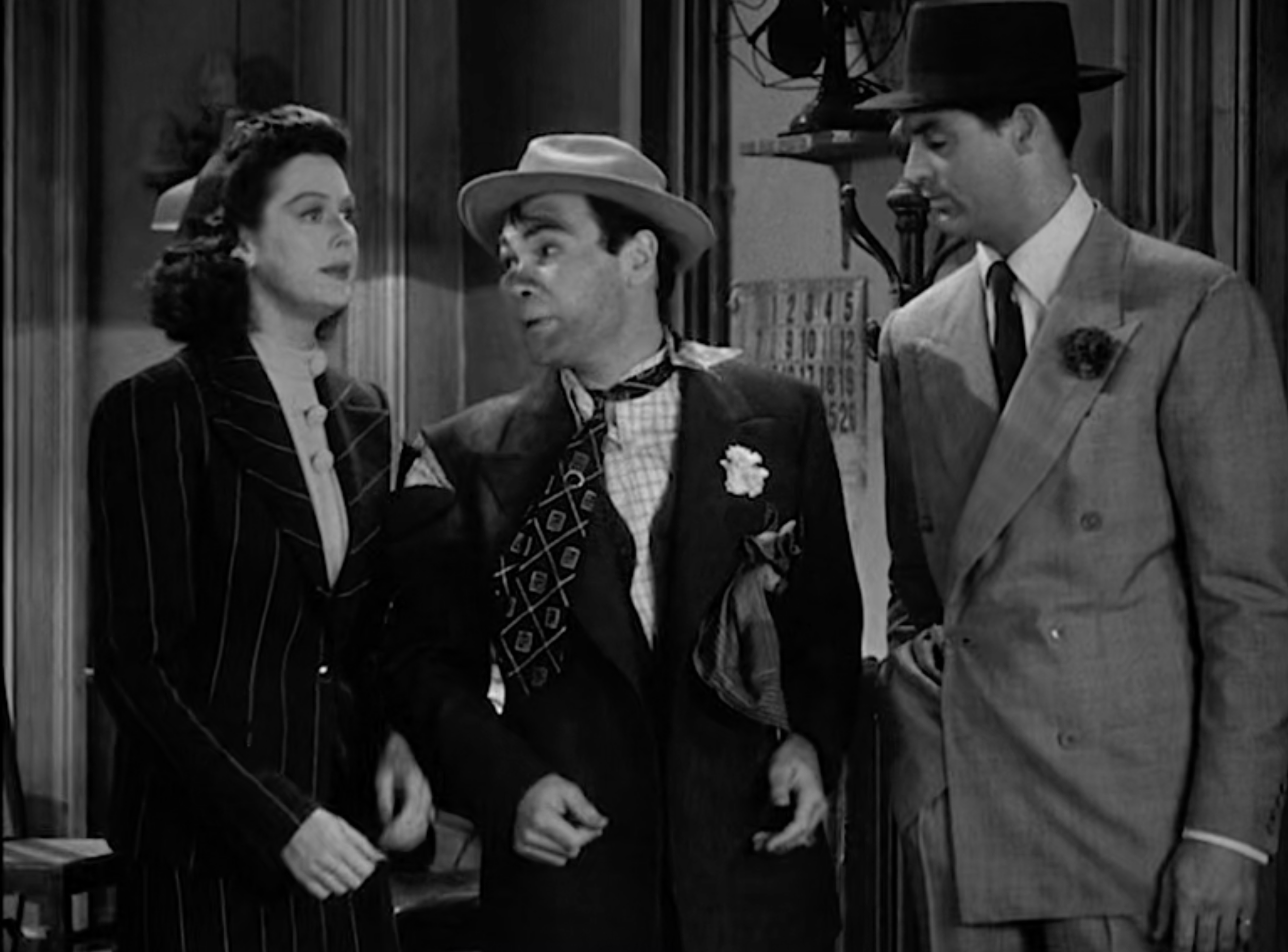
Walter, played by Cary Grant, lifts his head to watch Hildy leave, the top of his hat briefly cut off by the upper edge of the frame. After Hildy exits, Louie turns toward Walter, who remains exactly as he was: relaxed, upright, with his right hand in his pocket and his left hand at his side. Importantly, the camera does not follow Hildy. Instead, it shifts slightly up and to the right, reframing Walter so that he is centered and fully contained within the frame. With a casual shrug, he delivers the line, “Ah it’s fate, Hildy,” his posture unchanged.
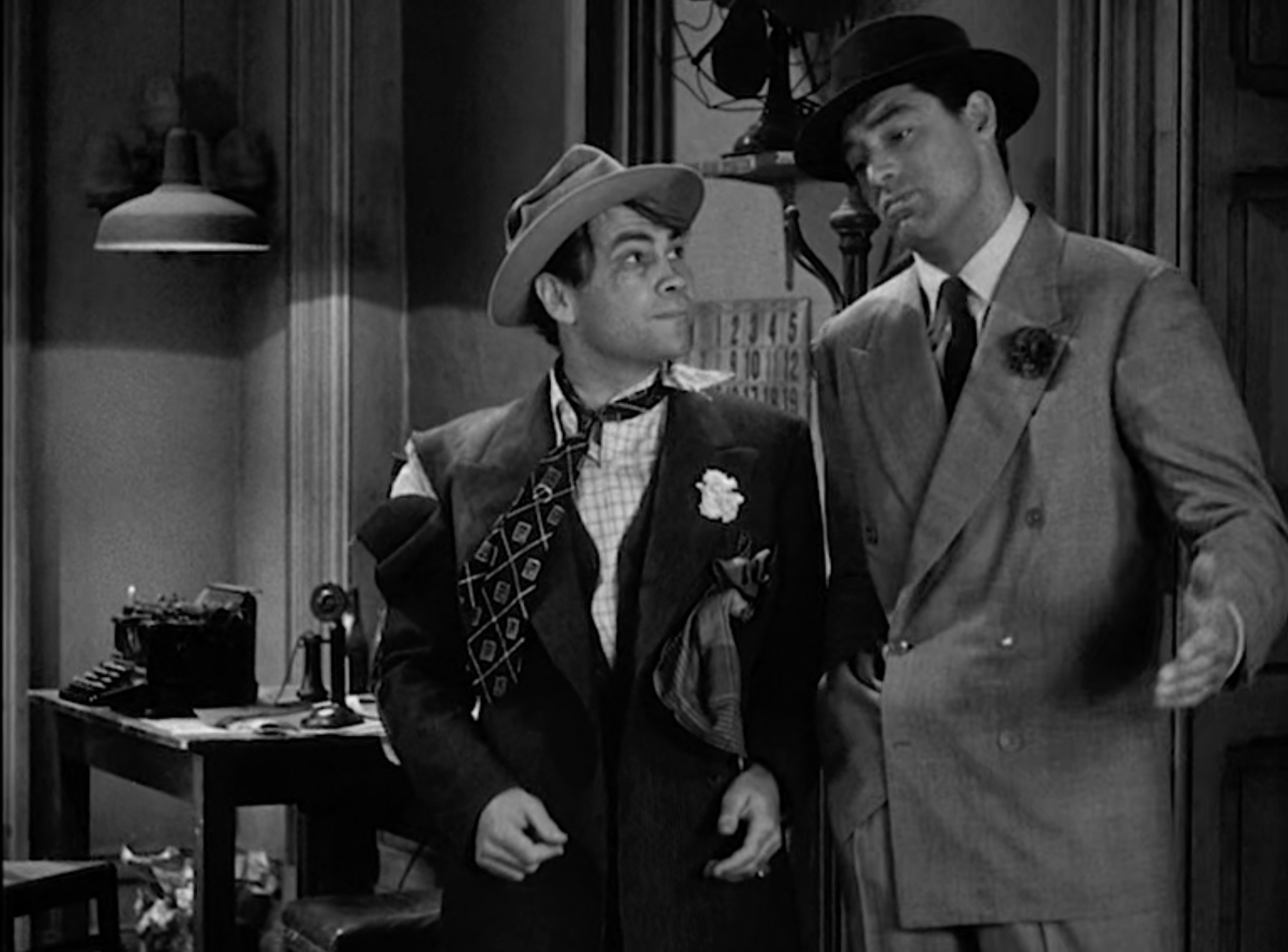
The choice to shoot this moment in a medium shot is crucial. It allows the viewer to register small but telling details, especially Walter’s hand resting in his pocket. This gesture reinforces his composure and emotional detachment. A closer framing would likely obscure this detail, reducing our ability to read his body language. At the same time, Hildy’s abrupt exit contrasts sharply with Walter’s stillness. She moves away from the conflict, while he remains rooted in it, unbothered.
The camera movement further sharpens this contrast. Rather than tracking Hildy as she leaves, the camera recenters Walter, directing our attention toward him at the exact moment he asserts control with his line about fate. His shrug underscores his indifference, reinforcing the sense that he is unfazed by the situation that is overwhelming Hildy.
In just a few seconds, the film uses framing, movement, and performance to stage a clear emotional divergence. Hildy is anxious, reactive, and uncertain. Walter is composed, strategic, and in control. This imbalance is not confined to this moment. It echoes the film’s broader dynamic, where Walter moves with clarity of purpose while Hildy spends much of the narrative questioning what she wants.
