Walking Between Worlds in Pan’s Labyrinth
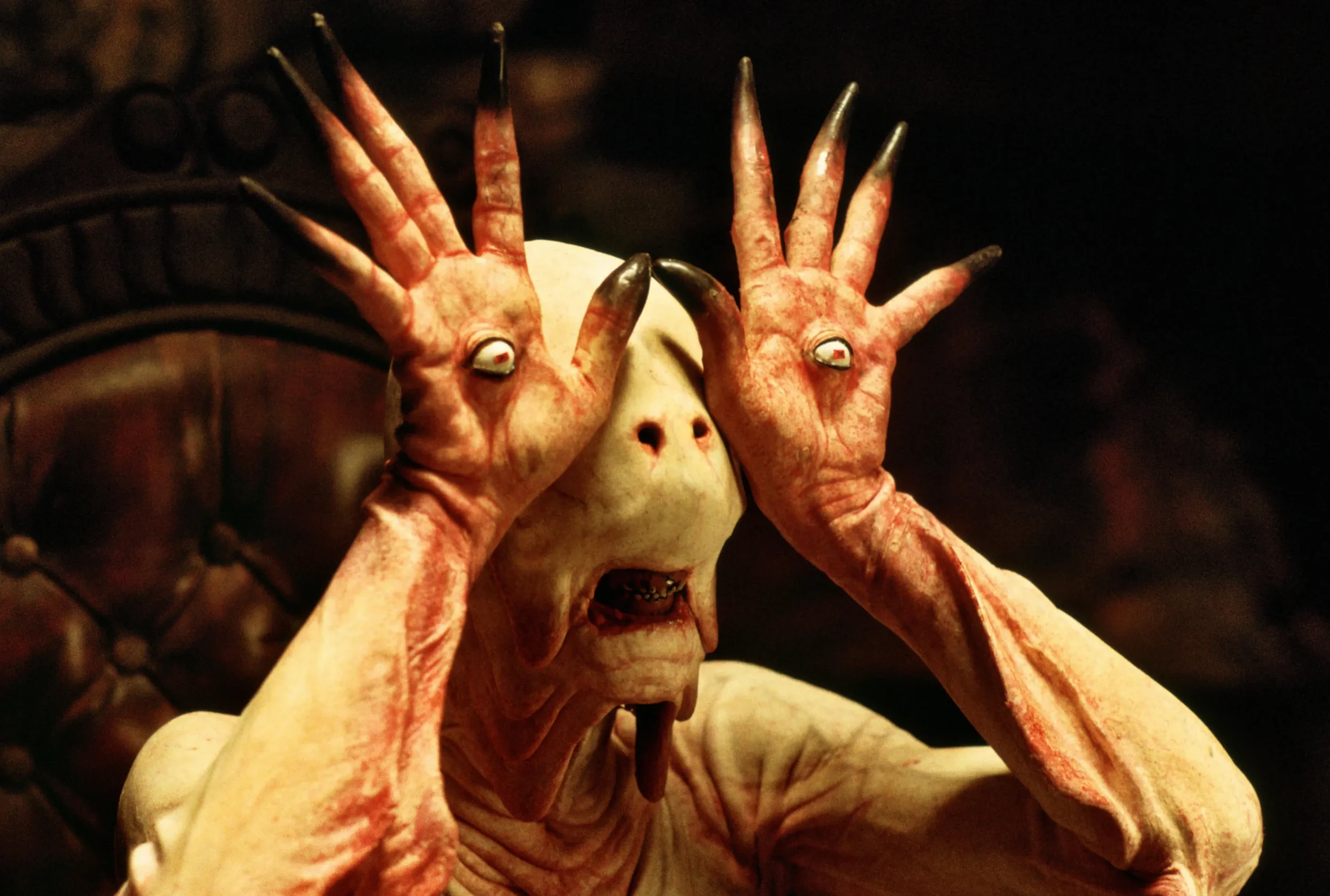
There are countless ways Guillermo del Toro communicates Ofelia’s longing in Pan's Labyrinth, but one of the film’s most subtle recurring motifs is also one of its simplest: shoes.
Throughout the film, Ofelia’s relationship to her shoes reveals the growing divide between the real world and the fantastical one she desperately wants to inhabit. The way she ignores them, dirties them, or finally delights in them becomes a kind of emotional shorthand for her state of mind. Del Toro repeatedly uses acting and physical behavior, especially Ivana Baquero’s small gestures and reactions, to show that Ofelia increasingly belongs to fantasy rather than reality.
The First Fairy
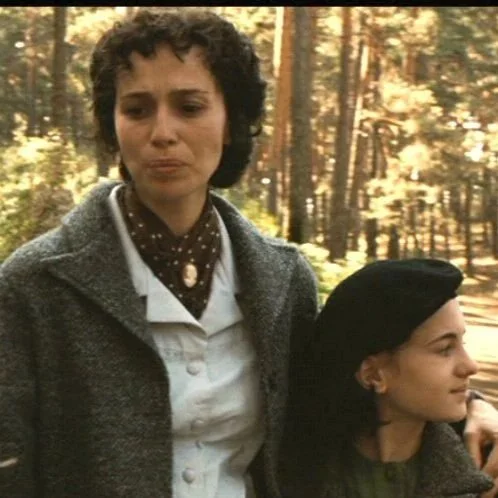
The first moment the film specifically draws attention to Ofelia’s shoes comes early, just after she encounters the fairy for the first time. Returning to her mother after wandering off the path, Ofelia excitedly says, “I saw a fairy.” Her mother barely acknowledges the statement before responding, “Just look at your shoes.”
The scene immediately establishes the tension between Ofelia’s inner world and the adult world surrounding her.
The camera frames Ofelia in a medium close-up, allowing the audience to focus on her expression rather than the environment around her. She smiles brightly at first, eager to share what she has seen. But when her mother points out the dirt on her shoes, the energy shifts. Ofelia glances downward only briefly before turning her attention away from her mother entirely, staring offscreen with a distant, distracted expression.
That tiny movement matters.
Rather than engaging with the real-world problem in front of her, Ofelia retreats back into the memory of the fairy. Baquero’s performance makes the transition almost instantaneous. Her attention drifts elsewhere, and the slight smile lingering on her face suggests that the magical encounter already feels more emotionally real to her than the conversation she is currently having.
The shoes become symbolic before the film ever says they are. They represent the ordinary world: cleanliness, obedience, appearances, adulthood. Ofelia’s indifference toward them signals how little interest she has in staying grounded there.
The Mud at the Fig Tree
The motif returns during Ofelia’s first task at the fig tree.
Here, Del Toro isolates Ofelia’s legs and shoes in an extreme close-up as she stands in thick mud. She lifts one foot to inspect the sole before letting it sink back into the ground. The camera slowly dollies backward, revealing more and more mud surrounding her.
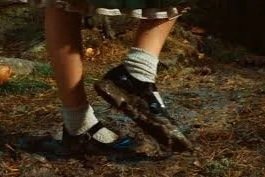
What makes the scene effective is that Ofelia does not react with panic or frustration. In fact, she barely reacts at all.
Earlier in the film, these shoes were treated as valuable and delicate, something her mother wanted preserved and cared for. But by the time Ofelia reaches the fig tree, she has wandered through an entire landscape of mud without seeming to notice. The gradual camera movement emphasizes this visually. The mud extends far beyond the spot where she pauses, suggesting she has been completely absorbed in the Faun’s task for some time.
Again, the acting communicates the emotional reality of the moment more than dialogue ever could. Ofelia’s calm inspection of the mud-caked shoe feels less like concern and more like brief recognition, as though she suddenly remembers the shoes exist at all.
Her fascination with the fantastical world overrides her attachment to material things from the real one. The shoes matter less because the world they belong to matters less.
The Red Shoes
The final transformation of the motif comes near the end of the film.
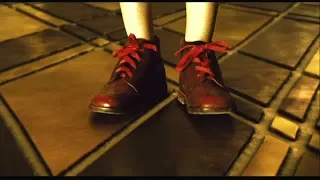
After being shot by Captain Vidal, Ofelia awakens in the magical kingdom. The black shoes she wore throughout the film have been replaced with vivid red boots. Del Toro frames them in another extreme close-up, this time against a glowing golden background that makes the color almost surreal.
Unlike the earlier scenes, Ofelia reacts with joy.
She leans back playfully on her heels, lifting her toes to admire the boots before settling herself again. The movement is small and childlike, but it radiates wonder. For the first time in the film, she is fully engaged with the shoes she is wearing.
That difference is crucial.
In the earlier scenes, the shoes represented obligations tied to the real world, and Ofelia neglected them because her imagination kept pulling her elsewhere. Here, the shoes belong to the fantastical world itself. They are no longer symbols of restriction or adulthood. They are part of the kingdom she has longed to enter from the very beginning.
Baquero’s performance sells the moment entirely through physicality. The excitement in the movement feels instinctive, almost playful, capturing the relief and awe of finally arriving somewhere she truly belongs.
Why the Motif Works
What makes this recurring detail so effective is its subtlety. Del Toro never pauses the film to announce the symbolism outright. Instead, the audience gradually builds the association through repeated behavior.
Every time Ofelia ignores, dirties, or reacts to her shoes, the film quietly reinforces the same emotional truth: her attachment to fantasy grows stronger while her connection to reality weakens.
That progression culminates in the final scene, where the motif transforms completely. The shoes no longer tether her to the real world. Instead, they become proof that she has escaped it.
It’s a remarkably small detail in a film overflowing with unforgettable imagery, but that’s exactly why it lingers. In Pan’s Labyrinth, even something as ordinary as a pair of shoes becomes a window into Ofelia’s inner world.
