Before Philadelphia: How American Screens Learned to Represent AIDS
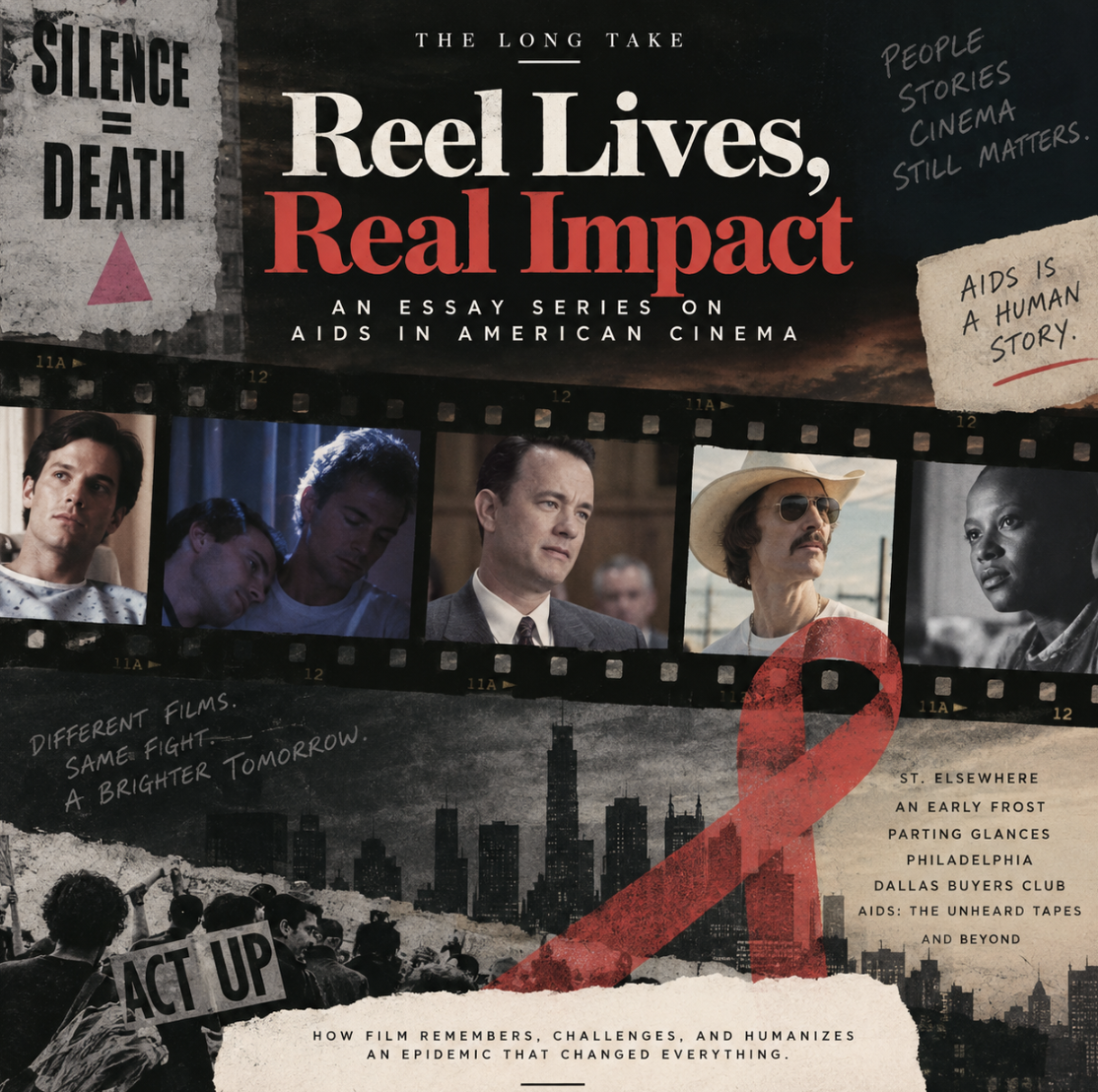
Part I of The AIDS Film Canon
There is a strange problem that confronts filmmakers whenever a new crisis enters the culture: before cinema can meaningfully interrogate it, cinema first has to figure out how to show it. The AIDS epidemic presented that problem with extraordinary urgency. By the early 1980s, Americans were encountering a disease that was poorly understood medically and already being distorted culturally. AIDS became inseparable from fear, sexuality, queerness, death, and moral judgment. Putting a person with AIDS on screen therefore meant doing more than introducing a sick character. It meant deciding what kind of person audiences would be asked to see, how close they would be allowed to get to that person, and what emotions the film considered acceptable responses to their illness.
Mainstream American television began confronting that problem surprisingly early, although cautiously. The December 1983 St. Elsewhere episode “AIDS and Comfort” is generally identified as the first American serial television episode to feature an AIDS storyline. Its patient is a successful, married Boston politician whose diagnosis forces revelations about his sexuality while simultaneously triggering fear throughout the hospital, including anxiety surrounding a blood drive. The episode arrived when AIDS was still heavily framed in public discourse as a disease belonging to gay men, and its decision to place the diagnosis inside the life of an outwardly respectable public figure complicated the idea that AIDS belonged to some distant, easily identifiable “other.”
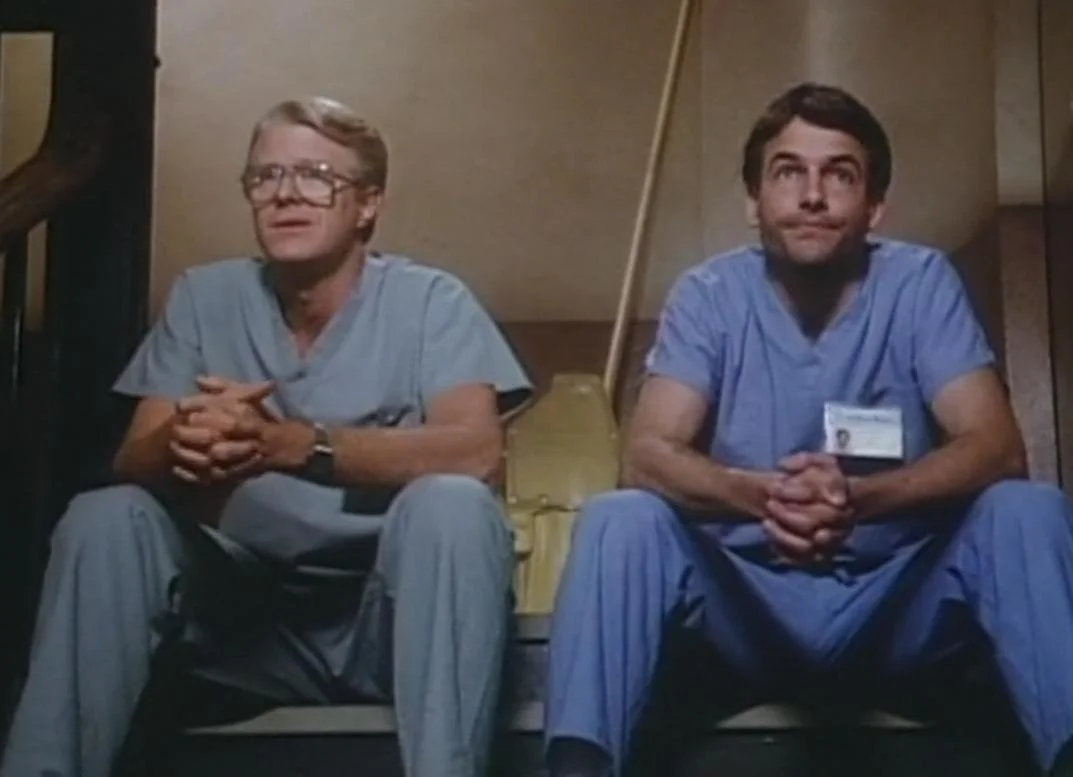
St. Elsewhere “AIDS & Comfort” TV Episode 1983
That strategy, however, exposes a tension that would follow AIDS representation for years. One of the easiest ways to convince a mainstream audience that someone with AIDS deserved sympathy was to construct a character whose respectability the audience already understood. Early representations could challenge the idea that people with AIDS were monsters or abstractions while still asking viewers to enter the epidemic through characters considered socially legible: professional, often white, frequently male, and usually surrounded by familiar institutions such as marriage, work, medicine, and family. Humanization was necessary, but it often arrived through reassurance.
That dynamic becomes even clearer in the 1985 television film An Early Frost. Michael Pierson, played by Aidan Quinn, is a young attorney who returns home and tells his family both that he is gay and that he has AIDS. The film was a genuine cultural breakthrough: it was the first major American network television movie centered on AIDS and brought the story of a gay man with AIDS into millions of homes at a time when fear of the disease was rapidly escalating. Its emotional structure translates the epidemic into one of the most recognizable forms available to television melodrama: a family confronting illness. Michael is not presented as an anonymous member of a stigmatized population. He is a son, a partner, a professional, someone whose diagnosis reverberates through an entire domestic world.
That mattered enormously, but sympathy has politics of its own. An Early Frost is powerful partly because it spends so much time establishing Michael as worthy of compassion. He is intelligent, loving, frightened, and surrounded by people who must gradually reconsider what they thought they understood about AIDS and homosexuality. For audiences in 1985, that was radical enough. Looking back, though, it also raises a more uncomfortable question: why should a person with AIDS have to demonstrate worthiness before receiving compassion at all? Early AIDS cinema often needed to make the patient recognizable before it could ask the audience to mourn him.
Bill Sherwood's Parting Glances, released theatrically in 1986, takes a strikingly different approach. The film follows Michael and Robert, a gay couple in Manhattan facing Robert's impending move overseas, while Michael remains emotionally entangled with his former lover Nick, played by Steve Buscemi, who is living with AIDS. AFI describes it as one of the first American films to turn its gaze directly toward the AIDS crisis, and Sherwood based the characters partly on people he knew while deliberately trying to move beyond negative stereotypes of gay life. That intention is visible in the film's tone. AIDS matters enormously, but it does not consume the entire world of the movie. The characters still flirt, fight, tease one another, go to parties, navigate relationships, complain, laugh, and behave badly. AIDS exists inside life rather than transforming life into a single extended lesson about death.

Parting Glances by Bill Sherwood 1985
That distinction is one of the reasons Parting Glances still feels so important. Nick does not have to be purified by illness. He can be abrasive, funny, jealous, charismatic, sexual, vulnerable, and sick all at once. The film refuses the idea that humanization requires idealization. Contemporary descriptions of the film repeatedly note this quality: AIDS is part of a broader social fabric rather than a melodramatic climax imposed on otherwise ordinary characters. In that sense, Parting Glances does something more radical than simply making the AIDS patient sympathetic. It allows a person living with AIDS to remain complicated.
This also complicates the popular story that AIDS cinema somehow began with Philadelphia in 1993. It did not. By then, independent films, television movies, theater, documentaries, and works such as Parting Glances, Longtime Companion, and Common Threads: Stories from the Quilt had already developed sophisticated cinematic responses to the epidemic. Even contemporary coverage of Philadelphia acknowledged that independent filmmakers had been addressing AIDS while the major Hollywood studios remained hesitant. The real significance of Philadelphia was not that Hollywood suddenly discovered AIDS. It was that one of the largest mechanisms of American popular culture finally decided AIDS could sustain a major studio prestige film.
The progression matters because representation was already changing before Hollywood caught up. Early television often asked, “Can you care about this person?” Films such as Parting Glances increasingly asked audiences to enter gay life without treating it as a sociological exhibit. The next major change would push the question further. Rather than simply presenting AIDS as tragedy, filmmakers could begin asking why living with AIDS had been made so much more painful by the world surrounding the disease.
The question would no longer simply be whether someone with AIDS deserved sympathy. It would become: Who made this person suffer, and why?
That is the cinematic territory Philadelphia would bring into the American mainstream.
