Ruins, Reality, and the Birth of Italian Neorealism

An essay from the History of World Cinema series
Part 1
Italian Neorealism begins with collapse.
Not just the collapse of a government or a film industry, but the collapse of illusion itself.
By the end of World War II, Italy had been physically and psychologically devastated. Cities were covered in rubble. Poverty, unemployment, and political unrest shaped everyday life. Under Benito Mussolini’s regime, Italian cinema had largely been dominated by polished studio productions known as “white telephone films”. These were glossy romances and comedies designed to project sophistication and stability.

The glossy escapism of Italy’s “white telephone films” reflected a fantasy of wealth, romance, and stability — the exact illusion Italian Neorealism would later dismantle in the aftermath of World War II.
But after the war, that fantasy became impossible to sustain. The streets outside Cinecittà Studios no longer resembled the carefully controlled worlds of prewar cinema. They looked broken.
Italian Neorealism emerged directly from that reality.
What makes the movement so fascinating is that it was not simply a new style of filmmaking. It was a moral response to historical catastrophe. Filmmakers rejected artificial sets, glamorous stars, and tidy narratives because those things no longer felt honest. Reality itself had become the subject.
Critic and screenwriter Cesare Zavattini argued that American cinema filtered reality into something “purified,” while Italian filmmakers needed to confront life directly instead. That distinction became the philosophical foundation of Neorealism.
The movement’s realism was political as much as aesthetic. Films like Rome, Open City (1945), directed by Roberto Rossellini, portrayed resistance fighters, government brutality, and the human cost of fascism with startling immediacy. The film’s rawness reflected widespread distrust toward Italian institutions after the war.
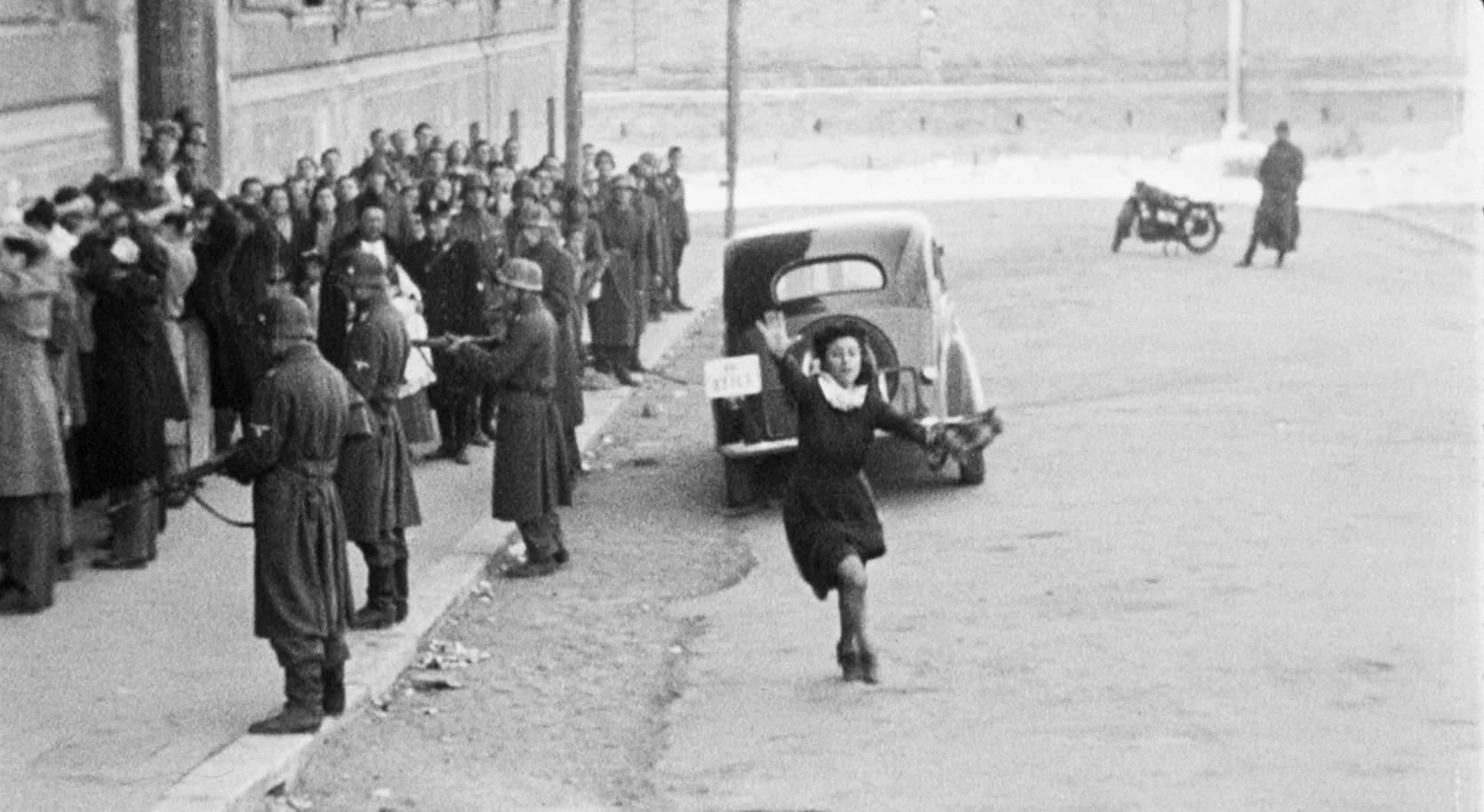
Roberto Rossellini’s Rome, Open City (1945) transformed the devastation of postwar Italy into raw cinematic realism, exposing the violence, fear, and political instability that glossy studio films had long ignored.
This tension between realism and political anxiety became central to the movement.
The Italian government quickly grew uncomfortable with films that portrayed national suffering too openly. The Andreotti Law of 1949 required scripts to receive government approval before obtaining production funding, effectively softening the movement’s overt criticism.
Yet even as political pressure increased, the stylistic innovations of Neorealism permanently changed world cinema.
One of the movement’s most important techniques was the blending of professional and non-professional actors. French theorist André Bazin referred to this as the “Law of the Amalgam,” arguing that the mixture created a more authentic cinematic atmosphere.
No film demonstrates this better than Bicycle Thieves (1948).
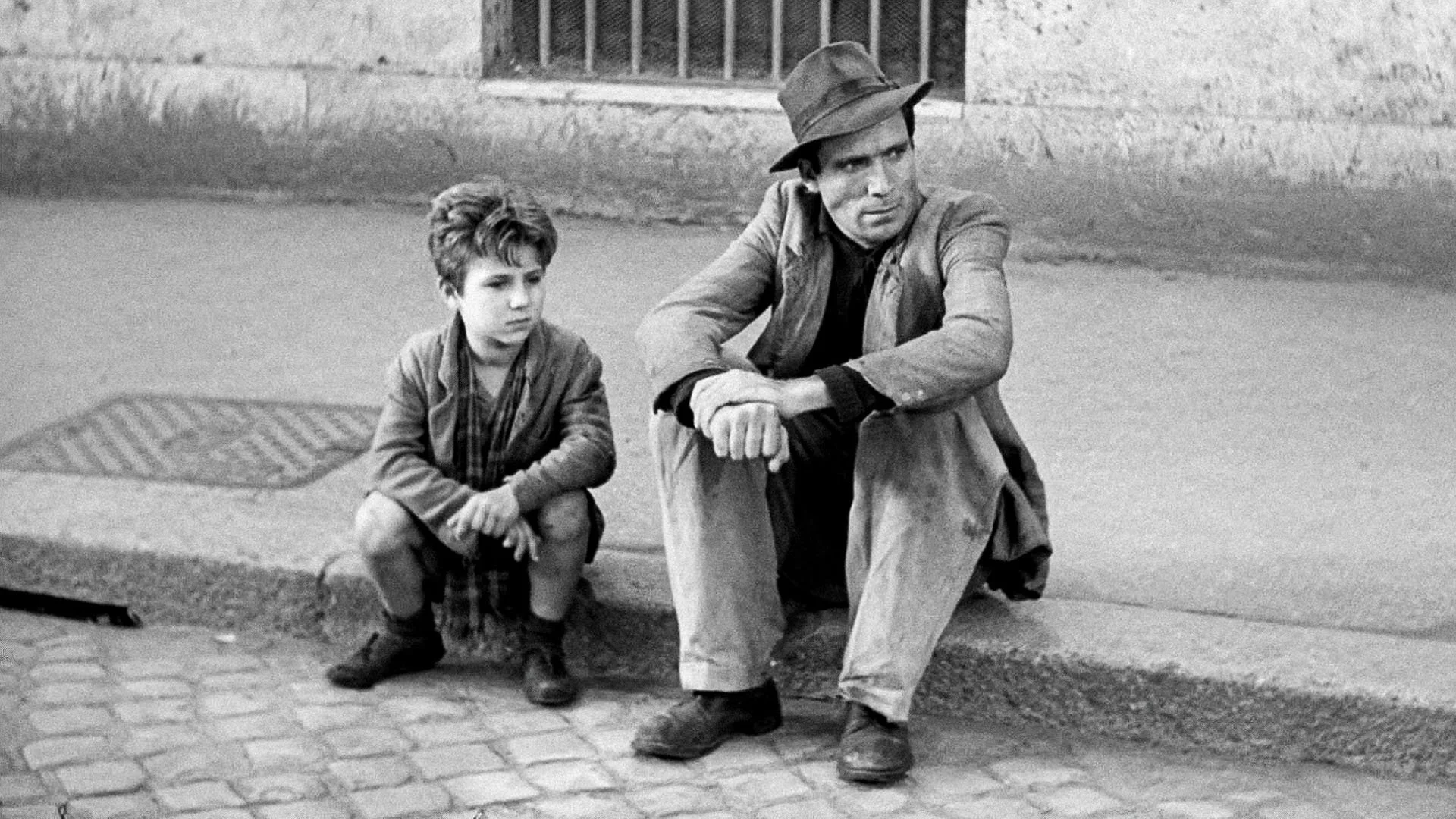
Vittorio De Sica’s Bicycle Thieves (1948) finds tragedy in ordinary survival, using non-professional actors and the streets of postwar Italy to blur the line between cinema and lived experience.
Directed by Vittorio De Sica, the film follows a father desperately searching for his stolen bicycle, which he needs to maintain employment. The narrative itself is deceptively simple, but the emotional power comes from the ordinariness of its world.
Nothing feels heightened.
The father and son wander through postwar streets, pause for conversations, drift through crowds, and experience moments that feel accidental rather than scripted. Many scenes appear almost detached from the central plot, but that looseness is precisely what gives the film its realism.
Life does not move with perfect narrative efficiency. Neorealist films understood this. The movement also embraced on-location shooting and ambiguous endings. Streets filled with rubble became visual reminders of national instability. Resolutions often felt incomplete because real life itself remained unresolved.
This refusal of artificial closure distinguished Italian Neorealism from classical Hollywood storytelling. The influence of the movement would spread far beyond Italy…
French New Wave directors admired its realism. Iranian filmmakers adapted its naturalism decades later under entirely different political conditions. What united all of these movements was a shared belief that cinema should confront reality rather than escape from it.
Italian Neorealism changed film history because it treated ordinary people as worthy of cinematic attention.
Not heroes.
Not celebrities.
Just people trying to survive.
Sources & Further Reading
Rome, Open City (Roberto Rossellini, 1945)
Bicycle Thieves (Vittorio De Sica, 1948)
André Bazin, “An Aesthetic of Reality: Neorealism”
Cesare Zavattini, “Some Ideas on the Cinema”
