The Five Functions of Film Style
When we talk about a film’s “style,” we often focus on whether it looks beautiful. We admire the symmetry of a Wes Anderson composition, the shadows of a film noir, or the movement of an elaborate camera shot. But film style is more than decoration. Every choice involving cinematography, editing, sound, color, performance, and production design shapes how we understand and experience a movie.
These choices generally perform five major functions: narrative, affective, thematic, aesthetic, and realist. A single element can serve several functions at once, but separating them helps explain why filmmakers make certain choices.
1. Narrative Function: Helping Us Understand the Story
The narrative function may be the most important function of film style, but it is also the easiest to overlook. Style can reveal information about a character, establish a setting, clarify the plot, or direct our attention toward an important detail. A costume might tell us someone’s profession before the dialogue does. A close-up might reveal that an apparently calm character is actually terrified.
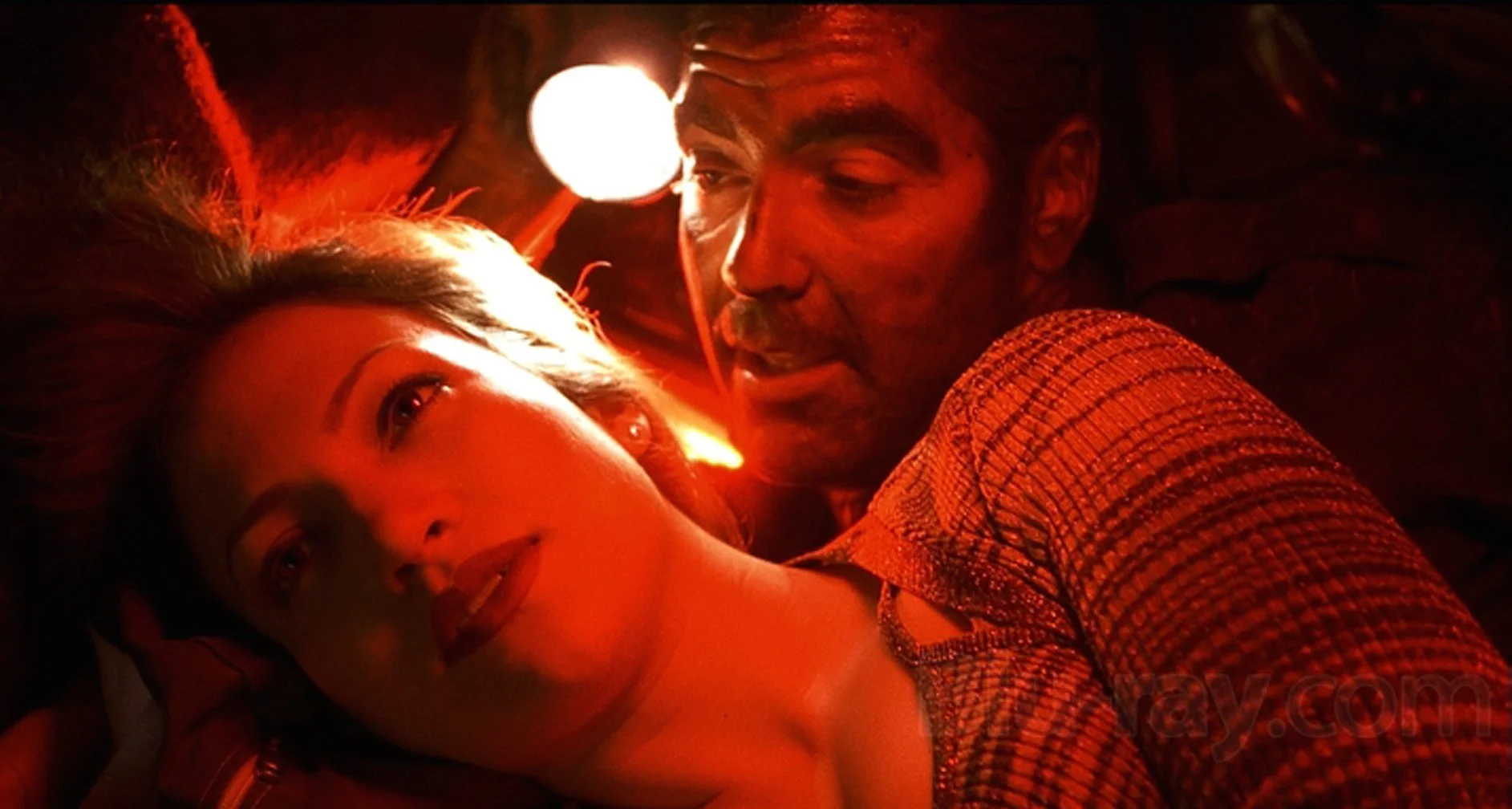
Steven Soderbergh’s Out of Sight uses color to distinguish between its primary locations. Scenes set in Miami tend to have a warm, orange appearance, while Detroit is rendered in colder shades of blue. The contrasting palettes help viewers immediately understand where they are while establishing the moods of the two cities. Miami feels hot and impulsive. Detroit feels cold and dangerous.
One way to identify an element’s function is the commutation test: imagine changing or removing it and consider what would be lost. If the Detroit scenes used the same warm palette as Miami, would the locations feel as distinct? If removing an element makes the story harder to follow, it is probably performing a narrative function.
2. Affective Function: Telling Us How to Feel
If narrative style helps us understand what is happening, affective style helps determine how we feel about it.
Films use visual and auditory cues to represent a character’s emotions. An actor may lower their voice, avoid eye contact, or move slowly to communicate sadness. Rain on a window, heavy clouds, dim lighting, or muted colors might reinforce that feeling. Music can make an otherwise neutral image seem romantic, frightening, or tragic.
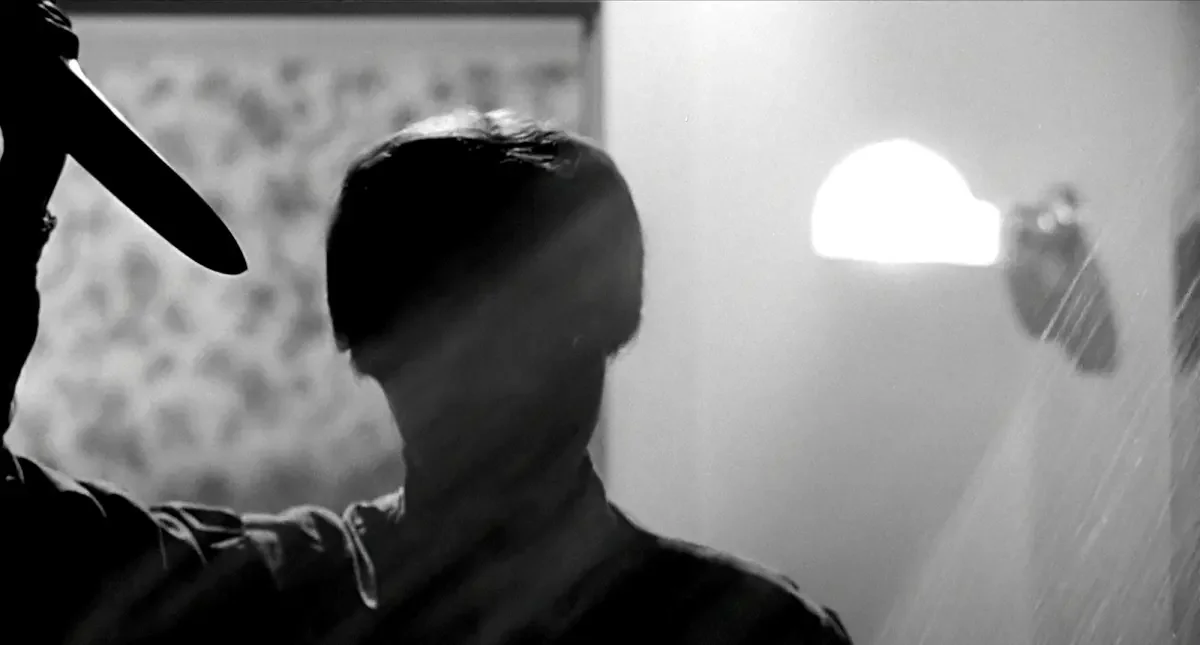
The shower scene in Alfred Hitchcock’s Psycho demonstrates how editing and sound can create an intense emotional response. Rapid cuts fragment the attack into brief impressions: a raised knife, a screaming face, a hand against tile, and water circling the drain. Bernard Herrmann’s shrieking strings make those fragments feel even more violent.
The same images accompanied by gentle music and slower editing would produce a completely different reaction. Change the style, and the emotional experience changes with it.
3. Thematic Function: Turning Ideas into Images
Themes are abstract ideas that a film explores, such as grief, power, identity, memory, or justice. Because these concepts cannot always be photographed directly, filmmakers use concrete images and sounds to represent them.
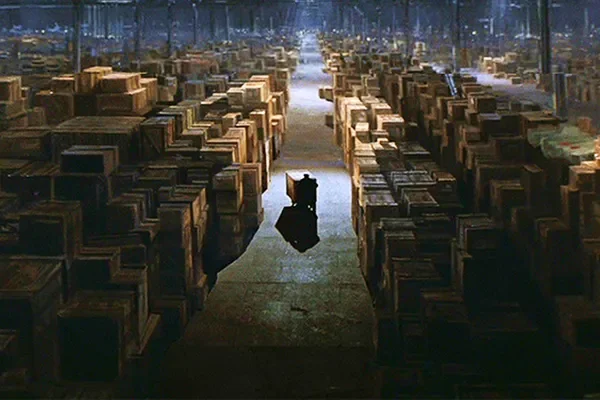
The final shot of Raiders of the Lost Ark is a classic example. After Indiana Jones recovers the Ark of the Covenant, the United States government assures him that “top men” are studying it. The film then shows a worker pushing the crated Ark through an enormous warehouse filled with countless identical boxes.
On the narrative level, the shot tells us where the Ark has gone. On the thematic level, it suggests something more unsettling. The Ark becomes one mystery among thousands, implying that the government possesses secrets far beyond anything Jones or the audience can imagine.
The composition communicates this idea without spelling it out in dialogue. As the camera pulls farther away, the individual crate becomes almost impossible to distinguish. One object becomes a broader statement about secrecy, bureaucracy, and institutional control.
4. Aesthetic Function: The Pleasure of Looking
Not every stylistic choice needs to advance the plot, express emotion, or represent a major theme. Sometimes a film creates visual and auditory patterns simply because they are pleasurable to experience.
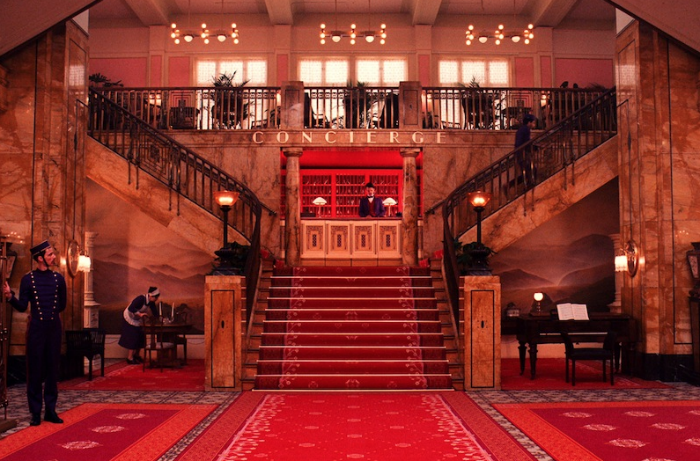
Wes Anderson is one of the clearest examples of a filmmaker who foregrounds aesthetic style. In The Grand Budapest Hotel, characters are frequently positioned within meticulously symmetrical frames. Doors, elevators, hotel desks, and hallways become organized geometric designs.
Anderson also uses planimetric compositions, in which the camera faces the background directly rather than viewing the action from an angle. During conversations, he may show one character facing the camera, cut to another character in a similarly frontal position, and then cut back again. A more conventional film might use over-the-shoulder shots, but Anderson turns the exchange into a visual pattern.
These compositions can contribute to tone or theme, but they also provide pleasure through their precision. We enjoy noticing the centered figures, coordinated colors, and perfectly timed movements. Part of their function lies in the experience of the pattern itself.
5. Realist Function: Making the Film Feel Lived-In
Film style can also attempt to mimic ordinary human perception. The realist function makes events feel continuous, natural, and physically present, as though the audience is observing rather than being guided by a filmmaker.
One technique associated with realism is the long take, an uninterrupted shot that continues without visible editing. Because there are no cuts to remove time or rearrange space, the action appears to unfold continuously in front of us.
Deep-focus cinematography can create a similar effect by keeping several spatial planes in focus simultaneously. Instead of isolating one subject against a blurred background, deep focus allows us to examine activity in the foreground, middle ground, and background.
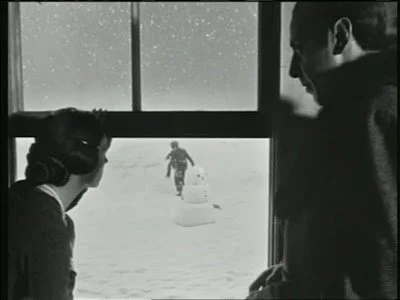
Orson Welles uses deep focus throughout Citizen Kane. In the scene in which the young Charles Kane plays outside in the snow, he remains visible through a window while the adults inside decide his future. We can observe the child playing in the background while listening to the conversation that will permanently change his life in the foreground.
The shot feels spatially complete, but it also demonstrates how the five functions can overlap. The deep focus is realist because it creates continuous, dimensional space. It is narrative because it shows simultaneous actions. It is affective because the distance between Charles and the adults emphasizes his powerlessness. It is thematic because the physical separation reflects the loss of his childhood.
Style Is Never Just “Style”…
The five functions of film style are not mutually exclusive. One choice can tell the story, produce an emotion, express a theme, create an attractive pattern, and imitate reality all at once.
The goal is not to force every shot into a single category. It is to ask what each stylistic choice contributes. Why is this scene blue instead of orange? Why does the camera remain far away instead of cutting closer? Why are the characters centered? What would change if the shot, sound, or performance were different?
Once we begin asking those questions, style stops being a vague description of whether a film looks “good.” It becomes a system through which movies tell us what happened, suggest what it means, and teach us how to feel about it.
