The Invisible Structure of Movies
Most people understand film theory long before they know the words for it.
They know when a scene “feels too long.” They know when a twist arrives at exactly the right moment. They know when a movie feels satisfying even if they cannot explain why structurally. Audiences instinctively recognize rising tension, payoff, pacing, and emotional escalation because movies have spent over a century quietly teaching viewers how cinematic storytelling works.
That is what fascinates me most about screenwriting structure.
The average viewer probably could not define terms like “inciting incident,” “midpoint reversal,” or “Freytag’s Pyramid,” but they absolutely feel those mechanisms operating underneath a film. Structure becomes invisible when it works well. You are not supposed to notice it consciously. You are supposed to experience it emotionally.
In many ways, good screenwriting is architectural.
You rarely think about the structural engineering of a building while standing inside it, but the building still determines how you move through space. Movies function similarly. The structure underneath a screenplay shapes audience anticipation, tension, relief, and momentum whether viewers realize it or not.
That realization was part of what initially drew me toward film theory in the first place. Oddly enough, it was not through textbooks or classic cinema. It was through those old FX television specials where casts and directors explained how movies were made. I specifically remember behind-the-scenes segments for films like X-Men Origins: Wolverine and Twilight where directors discussed choreography, pacing, camera movement, and why certain scenes needed to unfold in specific ways.
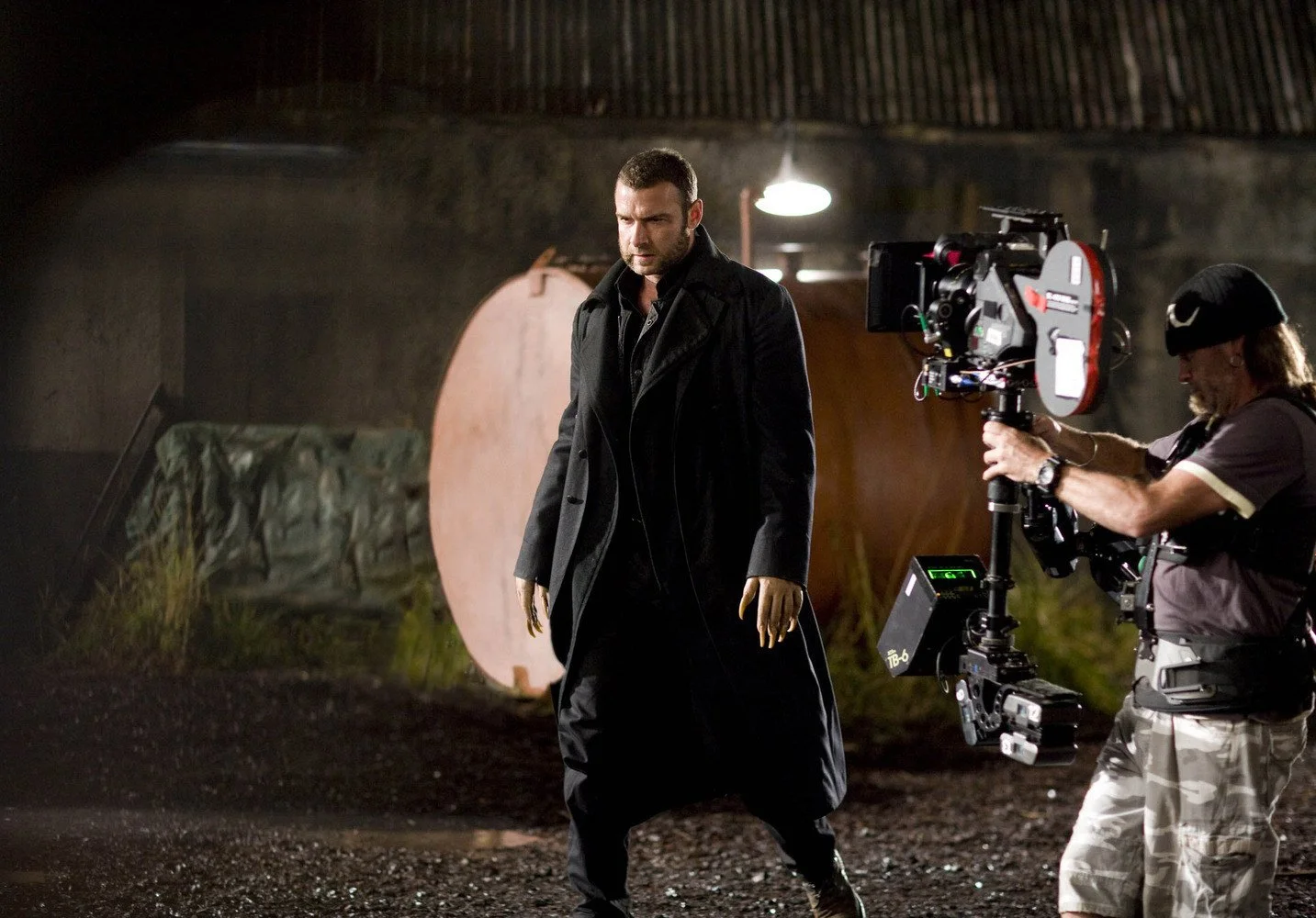
Even as a kid, it fascinated me that movies were constructed experiences.
Nothing happened accidentally.
Every emotional beat was engineered.
The foundation for most modern screenwriting still traces back to ideas that are much older than cinema itself. Aristotle’s Poetics, written thousands of years before film existed, argued that stories function through a beginning, middle, and end. Conflict emerges, escalates, and resolves. That basic framework eventually evolved into what most audiences now recognize as the three-act structure.
Act One establishes the world and introduces disruption.
Act Two complicates that disruption through escalation and obstacles.
Act Three resolves the central tension.
Simple.
Almost invisible.
And unbelievably effective.
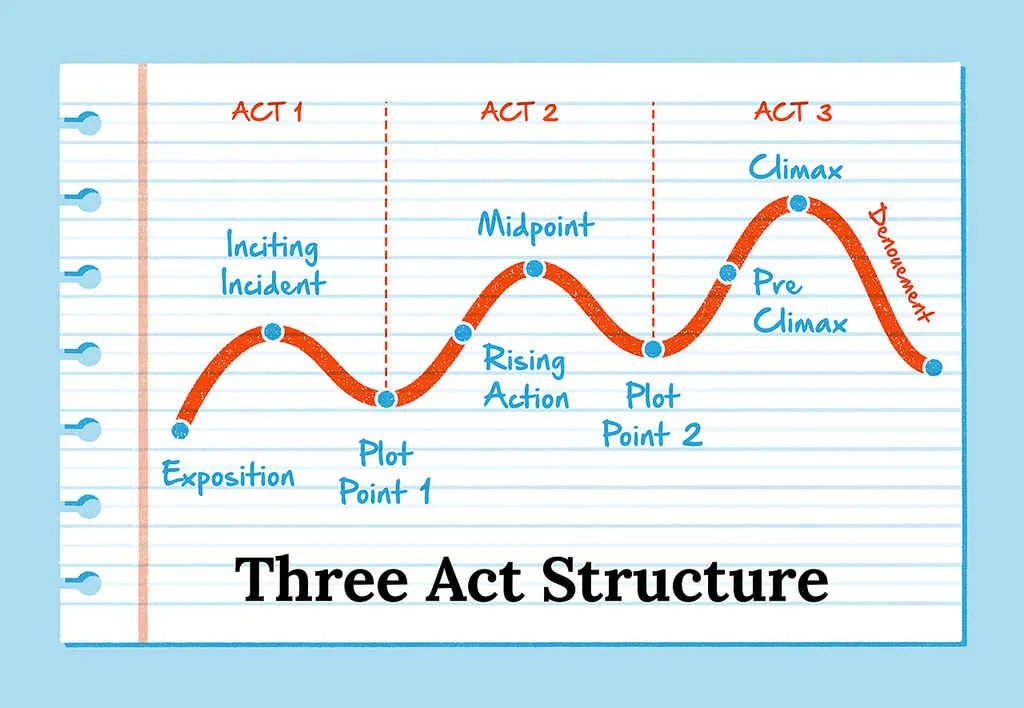
A cinematic three-act structure diagram showing setup, confrontation, and resolution, designed in a clean film-analysis style with subtle screenplay and projector textures.
Freytag later visualized dramatic structure as a pyramid: exposition, rising action, climax, falling action, and resolution. Even modern blockbuster filmmaking still largely follows this emotional rhythm. The terminology changes slightly depending on the theorist or screenwriting method, but the underlying shape remains remarkably consistent.
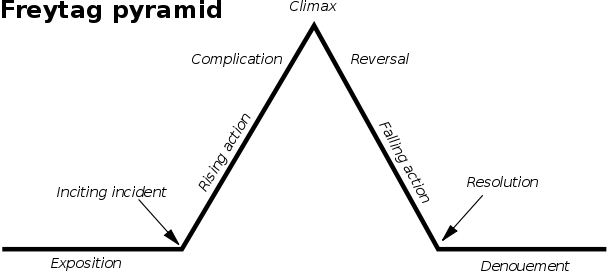
A cinematic Freytag Pyramid diagram showing exposition, rising action, climax, falling action, and resolution, designed in a clean film-analysis style with subtle screenplay and projector textures.
You can see it everywhere once you start looking for it.
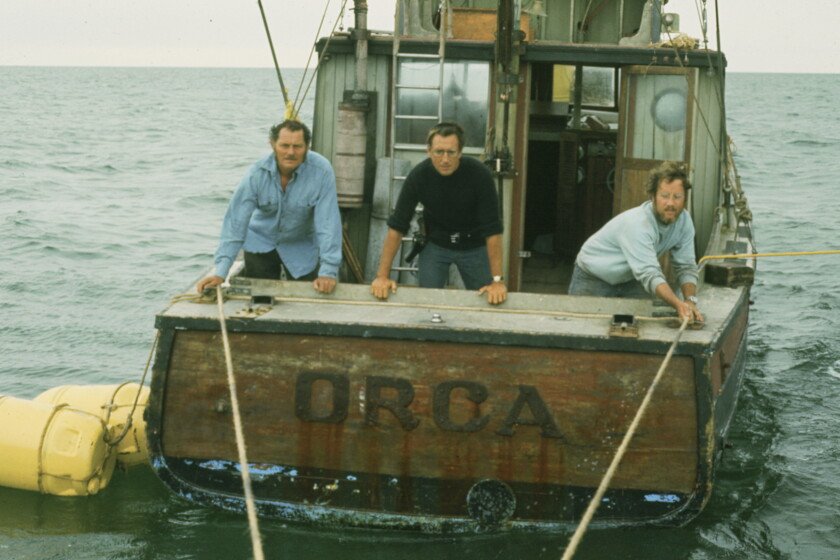
Take Jaws.
The first act establishes Amity Island, Brody’s fear of water, and the shark attacks disrupting the town’s sense of safety. The inciting incident is not merely the first shark attack itself, but the moment the town refuses to fully acknowledge the danger. That decision creates narrative momentum.
The second act escalates the threat while repeatedly delaying resolution. The town stays open. More attacks occur. Tension compounds. By the time Brody, Quint, and Hooper finally head out onto the ocean, the movie has transformed from a community thriller into survival horror.
Then Act Three strips everything down to confrontation: One boat, three men, one shark.
The structure feels natural because Spielberg hides the mechanics beneath pacing, character, and suspense.
That invisibility is what makes the movie work.
Modern screenwriting books like Blake Snyder’s Save the Cat! simply attempt to formalize this process further. Snyder breaks films into highly specific emotional beats: opening image, catalyst, midpoint, “all is lost” moment, finale, and so on. Many people criticize this approach for making Hollywood films formulaic, and honestly, sometimes that criticism is fair. Once you understand these patterns, you begin noticing how frequently modern blockbusters hit emotional beats at nearly identical moments.
But I also think audiences unfairly confuse structure with predictability.
Structure itself is not the problem.
Bad storytelling is.
Music operates similarly. Most popular songs follow recognizable structures involving verses, choruses, bridges, and repetition. Nobody dismisses music entirely because chord progressions repeat. Structure creates emotional expectation. Variation within that expectation is what creates artistry.
Film works the same way.
The three-act structure persists not because Hollywood lacks creativity, but because the structure mirrors how humans naturally process tension and anticipation. We instinctively understand escalation. We emotionally crave payoff.
Even films that appear to reject conventional structure often still interact with it indirectly.
The Dark Knight constantly escalates conflict by repeatedly forcing Batman into moral compromise. Get Out hides its structural precision beneath social satire and horror. Parasite famously pivots midway through the film in a way that feels shocking while still maintaining perfect structural control. These films feel fresh not because they abandon structure, but because they manipulate audience expectations surrounding it.
The best movies understand exactly when to obey cinematic grammar and when to disrupt it.
That grammar is something audiences learn unconsciously over time. Viewers understand that swelling music signals emotion. They understand that cross-cutting builds suspense. They understand that close-ups emphasize psychological importance. Nobody needs to formally study montage theory to emotionally grasp why rapid editing creates intensity.
Cinema teaches viewers how to watch movies simply by existing.
That is probably why film theory feels so endlessly interesting to me. It is not just about identifying techniques or memorizing terminology. It is about understanding how movies guide emotion invisibly. Why does one climax feel satisfying while another feels empty? Why does one scene generate suspense while another falls flat? Why do audiences collectively lean forward during certain moments without consciously realizing it?
The answer is usually structure.
Not rigid formula, but emotional architecture.
And when great filmmakers fully understand that architecture, the result can feel almost effortless. The audience stops noticing structure entirely because they are too emotionally absorbed in the experience itself.
That invisibility is not a failure of filmmaking — it is the magic trick! Happy watching :)
