The Hidden Politics Behind Outrage (Part I)
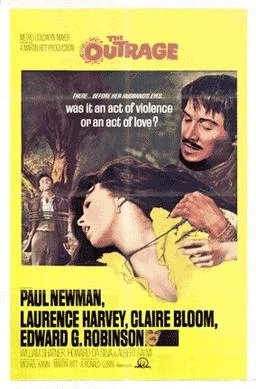
Released in 1950, Outrage occupies a complicated and often overlooked place in American film history. Directed by Ida Lupino, the film emerged at a transitional moment when the authority of the Production Code Administration was beginning to weaken, yet still exerted enough influence to shape what could and could not be shown on screen. This tension is central to understanding Outrage, a film that attempts to confront sexual assault at a time when even the word itself was largely absent from public discourse.
The film follows Ann Walton, a young bookkeeper engaged to be married, whose life is upended after she is raped while walking home from work. In the aftermath, Ann becomes increasingly isolated, unable to reconnect with her family, her fiancé, or her sense of self. Eventually, she flees her community and finds work at an orange ranch, where she meets Reverend Bruce Ferguson, who attempts to guide her toward recovery. What unfolds is not just a narrative of trauma, but a negotiation between what Lupino wanted to depict and what the industry would allow her to say.
By the time Outrage was in production, the cultural authority of the Production Code was no longer absolute. Independent filmmaking was on the rise, and audiences were beginning to fragment, with some viewers seeking more mature, socially conscious material. Even so, American media culture remained deeply conservative. The subject of rape was considered so indecent that it was rarely discussed openly, let alone depicted in film. In this context, Lupino’s decision to center her film on sexual assault was not just bold, but politically fraught.
Lupino was uniquely positioned to take on this challenge. After beginning her career as an actress, she became disillusioned with Hollywood’s tendency to commodify its stars, particularly women. In 1948, she co-founded an independent production company and set out to make films that addressed difficult social issues without resorting to moralizing. Her work required a careful balancing act. She had to push against the limits of the Production Code while still securing its seal of approval, which remained important for distribution and exhibition. This balancing act was not simply artistic, but strategic.
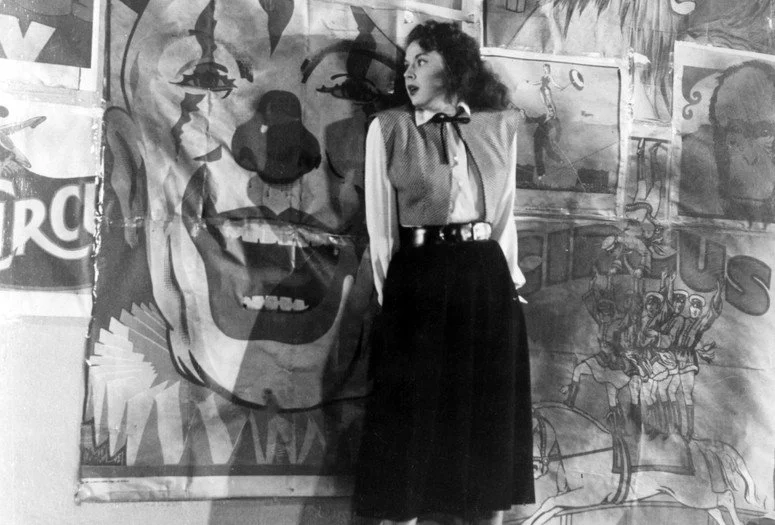
Outrage reflects that tension at every level. It is only the second Hollywood film to address sexual assault directly, and its very existence suggests that the Code’s grip was loosening. At the same time, the film bears the marks of compromise. The Production Code’s influence is not always visible in what is shown, but in what is softened, implied, or redirected. As a result, the film can feel at once daring and constrained, a work that gestures toward a more honest depiction of trauma while stopping short of fully realizing it.
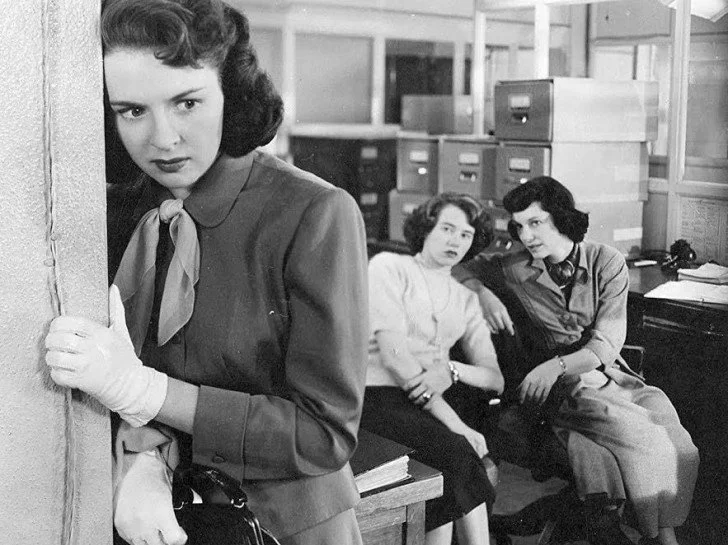
Where Outrage is most effective is in its depiction of Ann’s internal experience. Lupino uses editing, sound, and performance to immerse the viewer in Ann’s psychological state, allowing us to feel the lingering effects of trauma rather than simply observe them. One striking example occurs when Ann returns to work after the attack (23:38–24:09). The scene transforms an ordinary office environment into a source of anxiety. Everyday sounds, stamping papers and tapping fingers, grow louder and begin to echo unnaturally. As the camera cuts between these details and Ann’s face, the sequence conveys a mounting sense of overwhelm. The familiar becomes hostile.
A similar technique is used when Ann is asked to identify her attacker at the police station (27:22–27:44). The officer’s voice, calling out “left, right, left, right,” becomes increasingly distorted, echoing as the camera moves between the lineup and Ann’s strained expression. These moments rely heavily on Mala Powers’ performance. Her physical gestures, rubbing her head, furrowing her brow, communicate a level of distress that dialogue alone could not capture. The result is a deeply subjective portrayal of trauma, one that draws the viewer into Ann’s perspective.
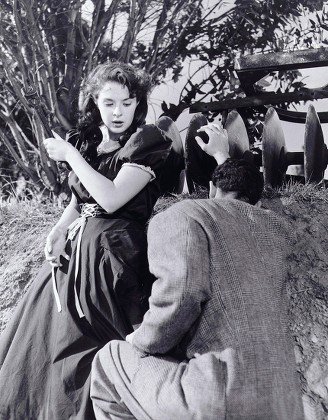
This approach reaches a peak later in the film, when a ranch hand corners Ann and attempts to kiss her (58:23–58:40). His voice begins to echo and distort, blending with unsettling music as the film cuts between his face, Ann’s reaction, and flashes of her attacker. The sequence collapses past and present, making clear that Ann’s trauma is not confined to a single moment, but continues to shape her perception of the world. Here, Lupino’s formal choices do what the script, constrained by censorship, cannot fully articulate.
Taken together, these sequences represent the film’s greatest strength. They offer an empathetic, experiential understanding of trauma that feels remarkably modern. Rather than relying on explicit depiction, Lupino uses cinematic language to convey what cannot be shown. In doing so, she creates moments that are both emotionally powerful and politically subversive, quietly pushing against the boundaries imposed by the Production Code.
If you like what you read, check out Part II of The Hidden Politics Behind Outrage!
