The Hidden Politics Behind Outrage (Part II)
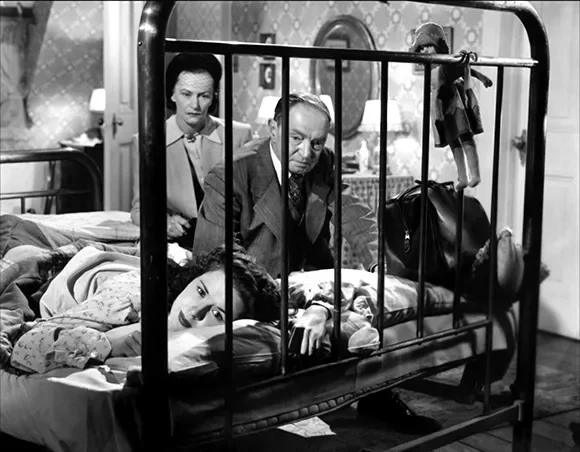
If the first half of Outrage feels daring in its depiction of trauma, the second half is where its compromises become most visible. After Ann arrives at the orange ranch and meets Reverend Bruce Ferguson, the film shifts in tone. What begins as a deeply subjective exploration of psychological distress gradually moves toward a more conventional resolution, one shaped as much by industry expectations as by narrative logic.
Reverend Ferguson emerges as a stabilizing force in Ann’s life, offering guidance, compassion, and a path toward reintegration. On the surface, his presence provides the film with a framework for recovery. However, the way this recovery is structured raises important questions about agency and authorship. The film begins by emphasizing the internal, ongoing nature of trauma, but it resolves that trauma through external intervention, specifically through a male figure positioned within a religious institution.
This tension becomes especially apparent in the film’s final act. During the church gathering, when Ann reacts violently to a man’s advances, the film briefly returns to the psychological intensity that defined its earlier sequences. Her response is not framed as irrational, but as the result of unresolved trauma. Yet even here, the narrative quickly redirects toward resolution. Once Ann’s identity is revealed and she is brought before the court, the focus shifts away from her internal experience and toward a broader moral argument.
It is in this courtroom scene that Reverend Ferguson delivers a monologue placing responsibility not solely on Ann, but on society at large. The gesture is notable. It reframes Ann’s actions within a larger social context and acknowledges, at least implicitly, the systemic failures surrounding sexual violence. At the same time, the scene functions as a narrative release valve. By articulating the film’s message so directly, it reduces the need for the kind of formal, experiential storytelling that made the earlier sequences so effective.

The ending that follows is perhaps the most contested aspect of the film. In one of the final scenes (1:11:02), Reverend Ferguson tells Ann how happy she has made him, explaining that it is because she needed him. The implication is difficult to ignore. After a film that so carefully illustrates the enduring, destabilizing effects of trauma, the resolution suggests that what Ann ultimately required was guidance from a benevolent male authority figure. Whether this was a conscious choice or a concession to the Production Code Administration, the effect is the same. The film’s earlier complexity gives way to a more familiar, and more comforting, narrative closure.
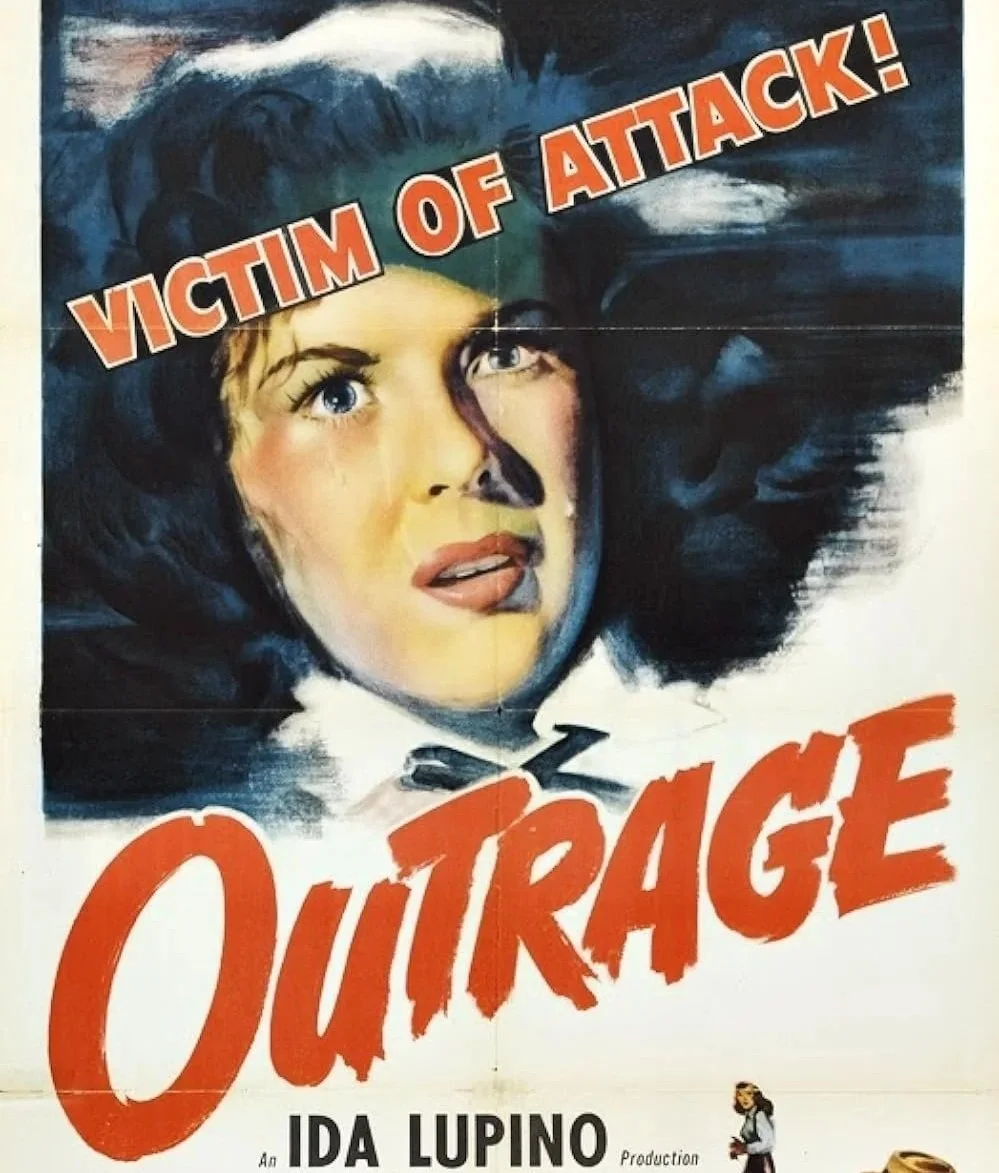
This shift helps explain why Outrage struggled to find its audience. Upon release, the film was met with largely negative reviews, many of which focused less on its craft than on its subject matter. For a significant portion of critics and viewers in 1950, the very idea of a film centered on rape was seen as inappropriate. Some reviewers dismissed it outright as indecent, arguing that such topics had no place in mainstream cinema. Others suggested that the film was better suited for educational or professional settings than for general audiences.
Even more sympathetic reviews were often qualified. Critics who praised the film’s ambition or its “daring” subject matter frequently included warnings about its content, framing it as something that might be too intense or uncomfortable for typical viewers. This hesitation reflects the broader cultural climate of the time, one in which respectability and restraint were still dominant values, even as those values were beginning to be challenged.

Interestingly, the film also drew criticism from those willing to engage with its subject more seriously. Some reviewers noted that the second half of the film lacked the same conviction as the first, a critique that feels especially resonant in retrospect. The early sequences, with their emphasis on Ann’s subjective experience, suggest a film pushing toward something genuinely radical. The ending, by contrast, feels shaped by the need to reassure, to restore order, and to align with prevailing moral expectations.
Caught between these competing pressures, Outrage ultimately satisfies neither audience. For more conservative viewers, the film’s subject matter was too provocative. For those seeking a more unflinching exploration of trauma, its resolution feels overly convenient. The result is a film that exists in a kind of cultural and industrial in-between space, reflecting both the possibilities and the limitations of its moment.
And yet, to dismiss Outrage on these grounds alone would be to overlook what makes it significant. Ida Lupino’s work on the film represents a deliberate effort to challenge the boundaries of what American cinema could address. Her negotiations with the Production Code, and her ability to embed moments of psychological realism within those constraints, offer valuable insight into the politics of filmmaking in mid-century Hollywood.
Watching the film now, it is easy to focus on what it does not do, or what it cannot fully say. But doing so risks flattening its historical importance. In 1950, a film like Outrage was not just uncommon, it was almost unthinkable. That it exists at all is a testament to Lupino’s persistence and to a shifting cultural landscape that was only beginning to make space for stories like Ann’s.
Outrage is not a flawless film. Its ending softens the very critique it works so hard to build, and its narrative compromises are difficult to ignore. But it is precisely within these tensions that the film becomes most revealing. It exposes the push and pull between artistic ambition and institutional constraint, between confronting reality and preserving respectability.
In that sense, Outrage is as much about the conditions of its own creation as it is about the story it tells.
